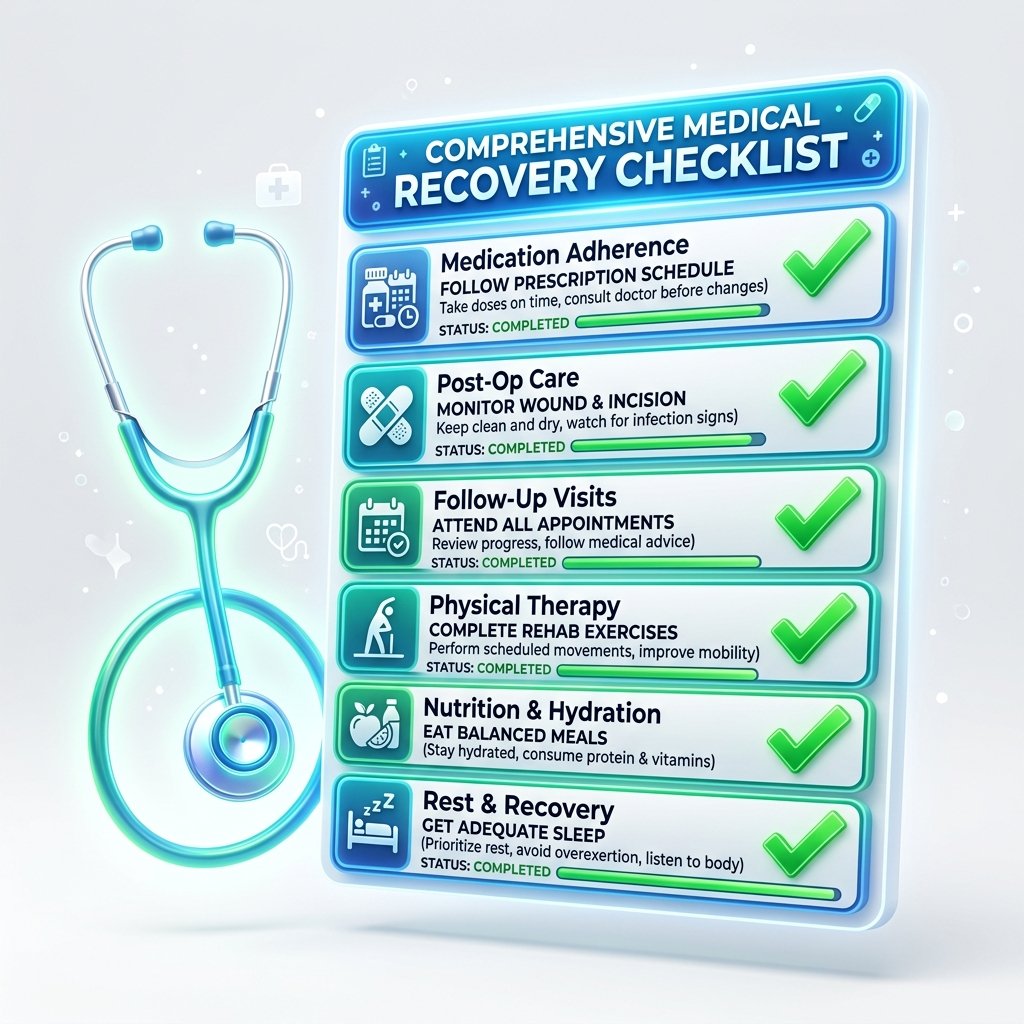
Securing a successful outcome from your expert gynecological surgery doesn’t end when you leave the operating table; it requires careful post-operative management. Adhering strictly to these do's and don’ts will drastically minimize your risk of complications.
The Essential Do's
- DO Walk Frequently: Light, short walks around your home prevent blood clots and help dissipate the carbon dioxide gas remaining in your abdomen.
- DO Stay Hydrated: Drinking plenty of water aids in flushing out anesthesia and combats constipation.
- DO Support Your Incisions: When you cough, sneeze, or laugh, gently press a soft pillow against your stomach to support your abdominal muscles.
- DO Follow Medication Schedules: Take your pain medication exactly as directed, even if you feel fine initially, as staying ahead of the pain makes recovery much smoother.
- DO Attend Follow-Up Appointments: Ensure Dr. Ankita evaluates the internal healing of your laparoscopic ovarian cyst removal or similar procedure.
The Critical Don'ts
- DON’T Lift Heavy Objects: Avoid lifting anything heavier than 10-15 lbs (such as groceries, pets, or young children) for at least 2-4 weeks.
- DON’T Submerge in Water: Showers are fine, but do not take baths, swim, or use hot tubs until your doctor officially clears you to prevent wound infections.
- DON’T Push Through Pain: If an activity causes sharp or sudden pain, stop immediately. Rest is your priority right now.
- DON’T Ignore Constipation: Straining on the toilet puts immense pressure on your fresh incisions. Use stool softeners if needed.
- DON’T Insert Anything Vaginally: If you had specialized endometriosis care involving reproductive organs, use pads instead of tampons and avoid intercourse until medically cleared.
Experiencing Issues During Recovery?
Don’t navigate recovery alone. Whether it is an unexpected symptom or a simple question, connect with Dr. Ankita Bansal Goyal for expert guidance.
Get Post-Op Support →Frequently Asked Questions
1. Can I wear tight clothes?
Avoid tight pants with restrictive waistbands. Opt for loose sweatpants, dresses, or nightgowns to avoid placing pressure on your healing incisions.
2. When can I sweep or vacuum?
Vacuuming and sweeping engage the core muscles substantially. Avoid these chores for at least 2 weeks post-surgery.
3. Is climbing stairs allowed?
Yes, you can climb stairs, but take them very slowly, pause if needed, and try to limit the number of trips up and down per day initially.
4. Can I use a heating pad?
Yes! A heating pad on your lower back or shoulder can effectively relieve gas pain and muscular soreness. However, do not place it directly on your fresh abdominal incisions.
5. Do I need to be on bed rest?
Absolutely not. Complete bed rest actually increases risk factors. You should be resting frequently but also ensuring you take light walks every couple of hours.
6. Is it safe to drive?
You cannot drive until you are entirely off opioid pain medication and can rapidly slam the brakes without experiencing severe abdominal pain (typically 1-2 weeks).
7. What happens if my steri-strips fall off early?
Steri-strips typically peel off on their own within a week. If they fall off earlier, simply keep the area clean and dry. Never forcefully peel them off yourself.