Ovarian cysts are fluid-filled sacs that develop on or inside the ovaries. They are extremely common — most women will develop one at some point in their life. The vast majority are harmless and disappear without treatment. However, some cysts grow large, rupture, or cause complications that require medical or surgical attention.
"Not every ovarian cyst needs surgery. But every ovarian cyst deserves evaluation. A simple ultrasound can tell us everything we need to decide the right course of action." — Dr. Ankita Bansal Goyal
What Are Ovarian Cysts?
Ovarian cysts are closed, sac-like structures within or on the ovary that are filled with fluid or semi-solid material. Most form as part of the normal ovulation process and resolve on their own within a few menstrual cycles.
Types of Ovarian Cysts
- Functional cysts (most common): Follicular or corpus luteum cysts that form during ovulation — almost always resolve on their own within 2–3 cycles
- Dermoid cysts: Contain tissues like hair, skin, or teeth; rarely cancerous but can grow large and cause torsion
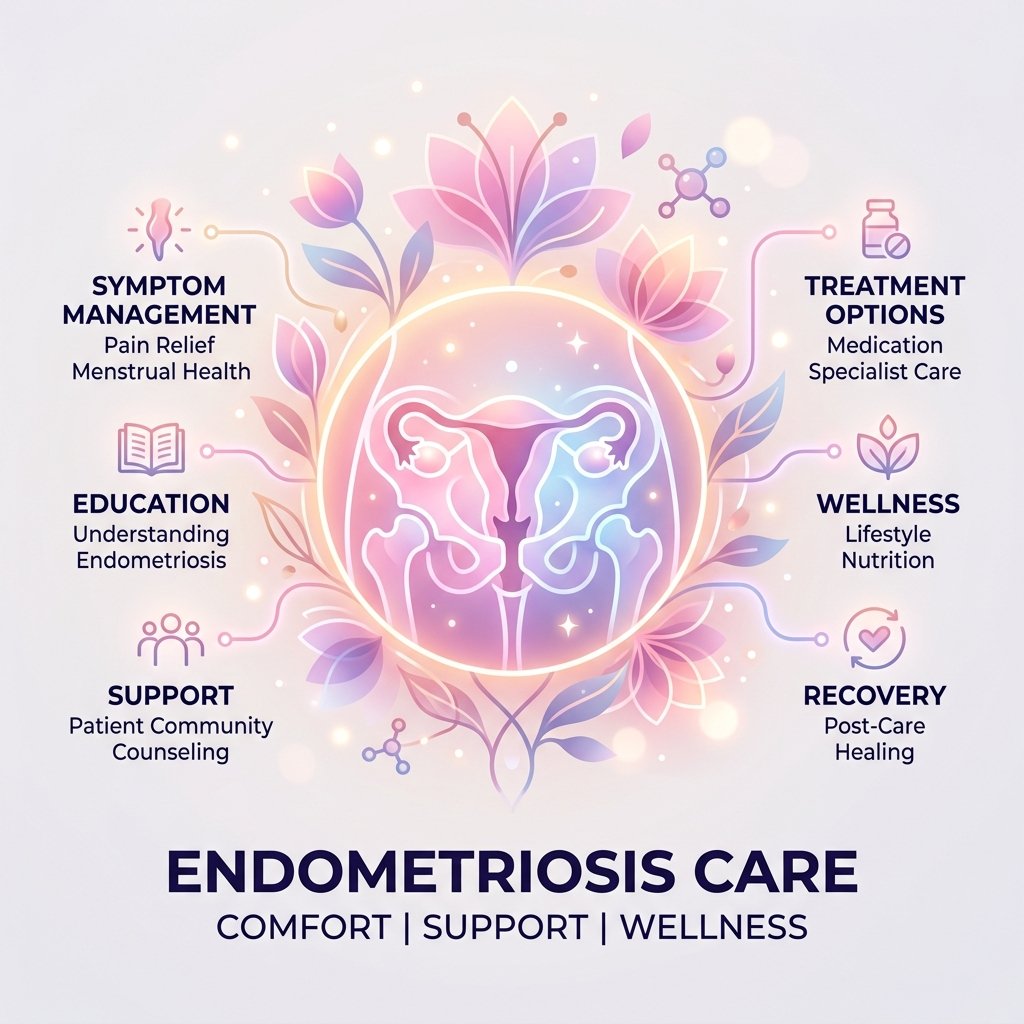
- Endometriomas: "Chocolate cysts" caused by endometriosis; can impair fertility and cause significant pain
- Cystadenomas: Grow from ovarian surface cells and can become very large (20–30 cm)
- Polycystic ovaries: Multiple small follicles associated with PCOS; not true cysts
Symptoms That Warrant an Evaluation
- Bloating or a feeling of fullness in the lower abdomen
- Dull aching pelvic pain — especially on one side
- Irregular periods or unusually painful periods
- Pain during intercourse or bowel movements
- Frequent urination or difficulty urinating
- Unexplained nausea or breast tenderness
Emergency Warning Signs — Seek Immediate Care
- Sudden, severe pelvic or abdominal pain — may indicate a rupture or torsion
- Pain with fever and vomiting — sign of possible infection or torsion
- Feeling faint, dizzy, or going into shock — internal bleeding from rupture
- Rapid or shallow breathing
Treatment Options
Small, simple cysts in reproductive-age women are often monitored with repeat ultrasound. Larger, complex, or symptomatic cysts require treatment ranging from hormonal therapy to laparoscopic cystectomy — a minimally invasive procedure that removes the cyst while carefully preserving healthy ovarian tissue and fertility.