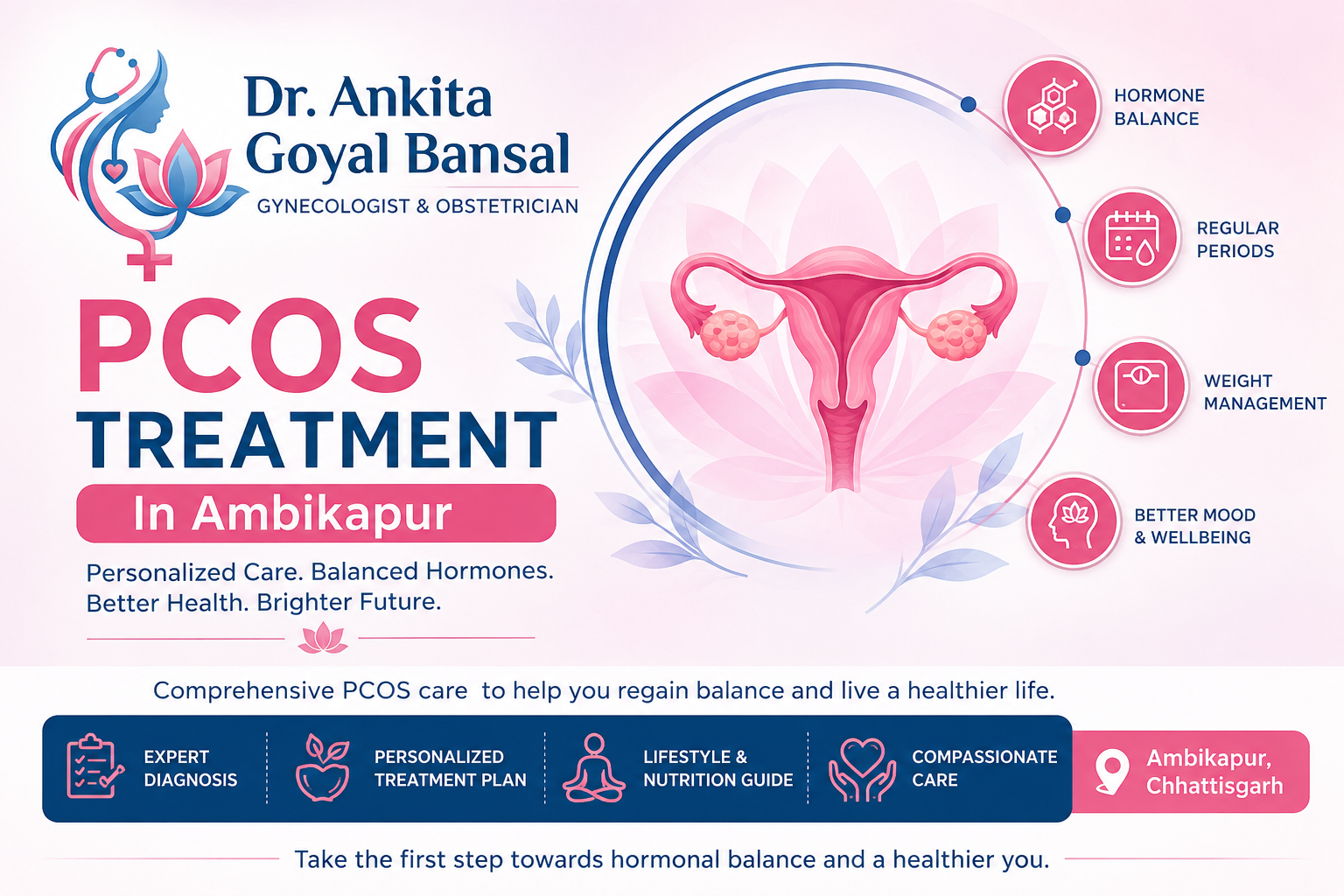
If your periods arrive whenever they feel like it, if hair is thinning on your head but growing on your chin, or if the weighing scale keeps climbing despite eating carefully, you have probably already typed "PCOS" into a search bar. This guide is written for women in Ambikapur and across Surguja who want a clear answer about what PCOS actually is, which tests genuinely matter, and what treatment looks like in practice.
Quick answer: PCOS (Polycystic Ovary Syndrome) is a hormonal and metabolic condition affecting roughly 1 in 5 Indian women. It is diagnosed through symptoms, blood tests and a pelvic ultrasound. Most cases are managed without surgery using weight control, diet, exercise and medication. Treatment is available at Sankalp Hospital, Ambikapur, Mon to Sat, 9 AM to 5 PM. Call 096912 12570.
What is PCOS and How Common Is It?
PCOS stands for Polycystic Ovary Syndrome. In a normal cycle, one egg matures each month and is released. In PCOS, hormonal imbalance stops that egg from being released. The follicle stays in the ovary as a small fluid-filled sac, and over months these accumulate, giving the ovary its characteristic appearance on ultrasound.
Two things drive it. First, higher-than-normal levels of male hormones (androgens), which cause acne, facial hair and hair fall. Second, insulin resistance, where the body produces plenty of insulin but cells respond poorly to it. That is why weight gain around the abdomen is so common, and why PCOS is as much a metabolic condition as a gynaecological one.
Studies across India suggest somewhere between 1 in 5 and 1 in 10 women of reproductive age are affected. It is one of the most common reasons women visit a gynecologist, and one of the most commonly missed for years because irregular periods get dismissed as normal.
PCOS vs PCOD: The Real Difference
Patients use these terms interchangeably, and even many clinics do. They are related but not identical.
| Aspect | PCOD | PCOS |
|---|---|---|
| What it is | Ovaries release immature eggs; a condition of the ovary | A whole-body endocrine and metabolic syndrome |
| Severity | Milder, very common | More serious, needs long-term management |
| Fertility | Most women conceive with minimal help | May need ovulation induction or further treatment |
| Long-term risk | Limited | Type 2 diabetes, high BP, cholesterol, endometrial changes |
In short: PCOD is largely an ovarian problem, while PCOS affects metabolism, weight, skin, hair and long-term health alongside the ovaries. The tests are the same, but the follow-up is more thorough for PCOS.
9 Symptoms You Should Not Ignore
You do not need all nine. Two or three appearing together is enough reason to get assessed:
- Irregular or missed periods: cycles longer than 35 days, or fewer than eight periods a year.
- Heavy or unpredictable bleeding: when a period finally arrives after a long gap, the lining has built up and bleeding can be heavy.
- Weight gain around the abdomen: especially when eating habits have not changed.
- Excess facial or body hair (hirsutism): on the chin, upper lip, chest or abdomen.
- Hair thinning on the scalp: a widening parting or reduced volume.
- Persistent acne: particularly along the jawline, continuing well past the teenage years.
- Dark velvety patches of skin: on the neck, underarms or groin, a visible marker of insulin resistance.
- Difficulty conceiving: after a year of trying, or six months if you are over 35.
- Mood changes and fatigue: low mood, anxiety and tiredness are genuinely part of the picture, not imagined.
How PCOS is Diagnosed
Diagnosis follows the Rotterdam criteria: you need two out of three features present. Irregular or absent ovulation; clinical or blood-test evidence of high androgens; and polycystic ovaries on ultrasound. Importantly, cysts alone do not equal PCOS, and you can have PCOS with completely normal-looking ovaries.
Tests Usually Done at the First Visit
- Pelvic ultrasound
- Counts follicles and measures ovarian volume; also rules out fibroids and other causes
- Thyroid profile
- An underactive thyroid mimics PCOS almost exactly and must be excluded
- Prolactin
- High prolactin is another common cause of missed periods
- Fasting glucose & insulin
- Detects insulin resistance and pre-diabetes early
- Testosterone, DHEAS
- Confirms elevated male hormones
- LH, FSH, AMH
- Assesses the hormonal pattern and ovarian reserve
- Lipid profile, HbA1c
- Baseline for long-term cardiac and diabetes risk
Most of these are done in a single sitting, ideally on day 2 or 3 of your cycle where possible. If your periods are very irregular, the tests are done whenever you present rather than waiting indefinitely.
Treatment Options That Work
There is no single tablet that cures PCOS, and any clinic promising a permanent cure in one month is not being straight with you. What genuinely works is a layered approach matched to your goal, whether that is regular cycles, clearer skin, or a pregnancy.
1. Weight and insulin control (the foundation)
This is not a lecture about willpower. Losing 5 to 10 percent of body weight restores ovulation in a large proportion of women, entirely on its own. For a 70 kg woman that is 3.5 to 7 kg, which is achievable and is the single most effective intervention available.
2. Medication for cycle regulation
Combined hormonal pills are used to regulate cycles, protect the uterine lining from years of unopposed oestrogen, and improve acne and unwanted hair. They are a management tool, not a cure, and cycles typically return to their previous pattern when stopped.
3. Insulin sensitisers
Metformin and inositol supplements improve how the body handles insulin. They often help restore ovulation, support weight loss and reduce long-term diabetes risk, particularly where insulin resistance is confirmed on testing.
4. Ovulation induction
When pregnancy is the goal, tablets such as letrozole or clomiphene stimulate the ovary to release an egg, with follicular tracking by ultrasound to time things correctly.
5. Laparoscopic ovarian drilling
Reserved for the small group who do not respond to medication. Through keyhole incisions, a few tiny punctures are made in the ovarian surface, which reduces androgen production and can restore natural ovulation. It is a short day-care procedure using 3D laparoscopic surgery, with recovery in a few days. It is an option for a minority, not a first step.
Diet and Lifestyle for Indian Patients
Generic Western PCOS advice often ignores how people here actually eat. Practical adjustments that work with a normal Indian kitchen:
- Change the grain, not the meal: switch white rice for hand-pounded or brown rice, and refined atta for multigrain. You do not have to give up roti and rice.
- Add protein to every meal: dal, paneer, curd, eggs, sprouts or chicken. Protein blunts the sugar spike that drives insulin.
- Never eat carbohydrate alone: a plain poha or bread breakfast spikes insulin hardest. Pair it with curd, egg or nuts.
- Cut liquid sugar first: sweetened tea several times a day, cold drinks and packaged juices are usually the biggest hidden load.
- Walk 30 to 40 minutes daily: brisk walking improves insulin sensitivity as effectively as gym training for most women.
- Add resistance work twice a week: muscle absorbs glucose, so even bodyweight exercises at home help.
- Protect your sleep: under six hours worsens insulin resistance and appetite hormones measurably.
- Check vitamin D and B12: deficiency is very common in this region and worsens fatigue and metabolic symptoms.
Give any change three months before judging it. Hormonal systems respond slowly, and most women abandon a plan at week four, just before it starts working.
PCOS and Getting Pregnant
Let us be clear about this, because it causes enormous anxiety: PCOS is one of the most treatable causes of infertility. The problem is ovulation, and ovulation can usually be induced.
The typical path starts with weight optimisation and cycle tracking, moves to ovulation induction tablets with follicular monitoring, and only then considers injectable stimulation or IVF referral. A large share of couples conceive at the first or second stage. Where a partner factor or tubal issue coexists, that is assessed in parallel rather than after months of delay.
If you have been trying for over a year, or over six months if you are past 35, it is worth being evaluated rather than waiting. Time matters more than any single treatment choice.
Cost of PCOS Treatment in Ambikapur
Costs vary by what is needed, but for planning purposes: a private gynecologist consultation in Ambikapur generally falls between ₹300 and ₹800. A pelvic ultrasound and the initial hormone panel together typically run a few thousand rupees, and monthly medication for cycle regulation or insulin control is usually modest. Ovulation induction with follicular tracking costs more because of repeat scans across a cycle.
Ask for an itemised estimate before starting, and be cautious of packages promising a guaranteed cure. PCOS is managed over years, not cured in a course.
Get Your PCOS Properly Assessed
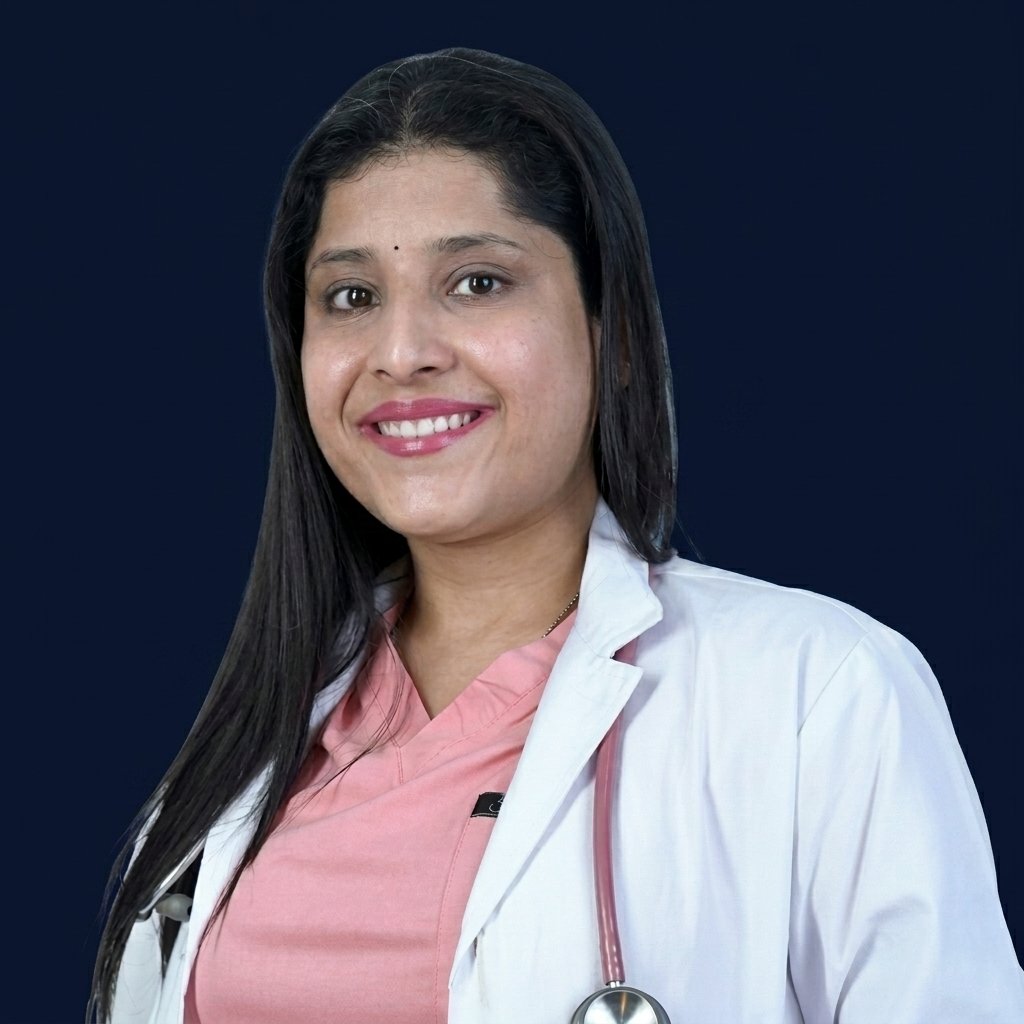
Irregular periods deserve an explanation, not a wait-and-see. Dr. Ankita Bansal Goyal (MD, FMAS – PGIMER Chandigarh) provides complete PCOS and PCOD treatment at Sankalp Hospital, Ambikapur. Mon to Sat, 9:00 AM to 5:00 PM.
Book an Appointment →Frequently Asked Questions
1. Can PCOS be cured permanently?
PCOS is managed rather than cured. However, symptoms can be brought under complete control, cycles can become regular, and pregnancy is very achievable. Many women live symptom-free for years through weight and insulin management alone.
2. Can PCOS be treated without surgery?
Yes. The overwhelming majority of cases need no surgery at all. Weight control, diet, exercise and medication manage most patients. Laparoscopic ovarian drilling is considered only when medication has failed.
3. Can I get pregnant naturally with PCOS?
Many women do. PCOS interferes with ovulation, not with the ability to carry a pregnancy. Weight optimisation alone restores natural ovulation in a significant number of women, and ovulation induction tablets help most of the rest.
4. Does PCOS go away after marriage or after having a baby?
No. This is a persistent myth. Marriage has no effect whatsoever. Symptoms sometimes ease after pregnancy because of weight and hormonal shifts, but the underlying condition remains and needs continued attention.
5. Will I need to take medicines for life?
Not necessarily. Medication is often used for a defined period to regulate cycles or achieve pregnancy. Where lifestyle change is sustained, many women reduce or stop medication under supervision.
6. Is PCOS dangerous if left untreated?
Untreated PCOS raises the long-term risk of type 2 diabetes, high blood pressure, cholesterol problems and changes to the uterine lining from years of missed periods. None of these are immediate emergencies, which is exactly why the condition gets ignored for too long.
7. Which doctor should I see for PCOS in Ambikapur?
A gynecologist is the right starting point, since diagnosis needs a pelvic ultrasound and hormone assessment together. Dr. Ankita Bansal Goyal treats PCOS at Sankalp Hospital, Bilaspur Road, Ambikapur. Call or WhatsApp 096912 12570 to book.
8. How long before treatment shows results?
Skin and energy often improve within 6 to 8 weeks. Cycle regularity typically takes 3 to 6 months of consistent lifestyle change and medication. Give any plan a full three months before concluding it is not working.