Chhattisgarh presents a particular set of challenges in women's health. Anaemia is widespread, the sickle cell gene is more common here than in most of India, and many families live several hours from a hospital that can perform an emergency caesarean. At the same time, the care available in the state has changed considerably: keyhole surgery, fetal Doppler monitoring and structured high-risk pregnancy care are now available outside the capital. This guide covers what to look for and what should be available to you.
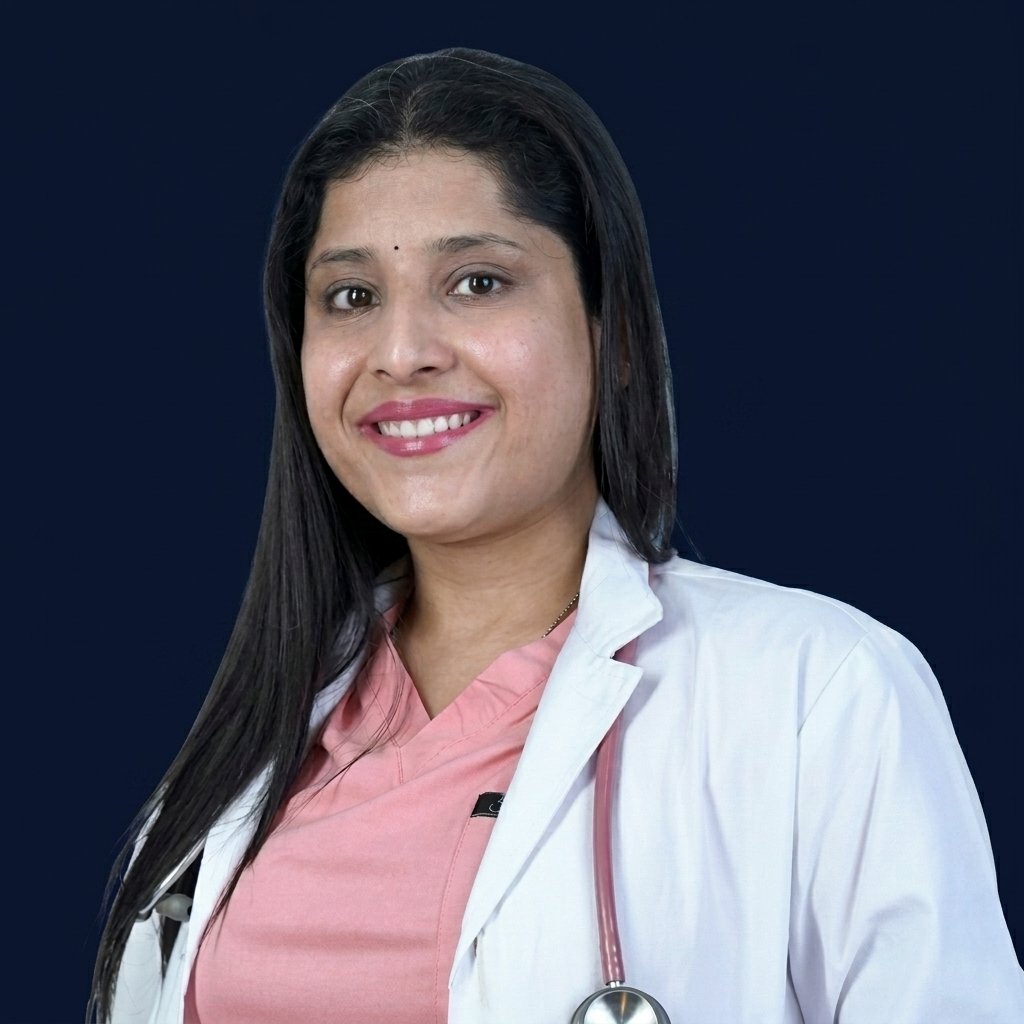
Quick answer: A good gynecologist in Chhattisgarh should hold an MS or MD in Obstetrics and Gynaecology, see you personally at each visit, work from a hospital that can perform an emergency caesarean at any hour with blood and newborn care available, screen routinely for anaemia and sickle cell, and offer keyhole surgery rather than defaulting to open operations. Dr. Ankita Bansal Goyal (MD, FMAS, PGIMER Chandigarh) consults at Sankalp Hospital, Ambikapur. Call 096912 12570.
Women's Health in Chhattisgarh: The Real Picture
Three features shape gynaecological practice here more than anywhere else in India.
Anaemia is the default, not the exception. National survey data puts more than half of pregnant women in India in the anaemic range, and Chhattisgarh sits close to that figure. A low haemoglobin is so common that it often gets noted and ignored. It should not be. It is the most preventable cause of a dangerous delivery, and correcting it takes time, which means it must be found early.
Sickle cell is a genuine consideration. Chhattisgarh carries one of the highest burdens of the sickle cell gene in the country, which is why the state is a focus of the national Sickle Cell Anaemia Elimination Mission. For a pregnant woman this matters twice over: sickle cell disease makes a pregnancy high-risk, and if both parents carry the trait the baby can inherit the disease. Screening is a simple blood test.
Distance changes clinical decisions. When a patient lives four hours from the hospital, you cannot plan care around frequent visits or assume she can return quickly if something goes wrong. That affects when iron is given intravenously rather than as tablets, when a patient is admitted earlier rather than sent home, and how firmly a delivery plan is made in advance.
What to Look For in a Gynecologist
- Postgraduate qualification. MS or MD in Obstetrics and Gynaecology. Any further fellowship, such as FMAS for minimal access surgery, adds specific surgical training.
- Continuity of care. The same doctor at each visit, and ideally at the delivery.
- Emergency capability at the hospital. Caesarean at any hour, blood arrangement, newborn care on site. Ask these three questions directly.
- Routine screening. Haemoglobin, thyroid, blood sugar and sickle cell should be offered without you having to request them.
- Uterus-preserving preference. Surgery that keeps the uterus where that is clinically reasonable.
- Written costs. An estimate before admission, with exclusions stated.
- Clear explanations. In the language you are comfortable in, with time for questions.
Conditions Commonly Seen in the State
| Condition | What to Know |
|---|---|
| Anaemia | Extremely common. Haemoglobin below 11 in pregnancy needs treatment, and below 7 needs urgent care |
| PCOS and PCOD | Irregular cycles, weight gain, unwanted hair, difficulty conceiving. Managed mostly without surgery |
| Fibroids | Very common by the forties. Many need no treatment at all; surgery is for symptoms, not for the diagnosis |
| Endometriosis | Severe period pain that is routinely dismissed as normal, often for years before diagnosis |
| Ovarian cysts | Most are functional and disappear on their own. Only some need surgery |
| Infertility | Often treatable with basic evaluation and ovulation induction, well before IVF is needed |
| High-risk pregnancy | Hypertension, diabetes, twins, previous caesarean, severe anaemia, sickle cell disease |
Pregnancy Care From Booking to Delivery
The schedule that should be followed anywhere in the state:
- 6 to 8 weeks: dating scan, blood group, haemoglobin, thyroid, blood sugar, infection screening, sickle cell test, baseline blood pressure and weight
- 11 to 13 weeks: NT scan and double marker test
- 18 to 20 weeks: anomaly scan, the detailed check of the baby's organs
- 24 to 28 weeks: glucose test for gestational diabetes, repeat haemoglobin, tetanus dose
- 28 to 36 weeks: growth scans, Doppler study where indicated, position check
- 37 weeks onwards: weekly review and delivery planning
Blood pressure and urine protein are checked at every visit because preeclampsia develops quietly between appointments. The full visit-by-visit breakdown is in our pregnancy checkup schedule.
On delivery, normal birth is preferred whenever it is safe. What genuinely improves the chances is regular antenatal visits, correcting anaemia early, controlled weight gain, staying active and monitoring the baby's position after 36 weeks. The comparison of normal delivery and caesarean covers costs and recovery in detail.
Surgical Options Now Available
The most important change in the state over the last decade is that major gynaecological surgery no longer requires a long abdominal cut. Fibroid removal, hysterectomy, ovarian cyst removal and endometriosis surgery can all be done through incisions of 5 to 10 mm.
The practical difference is two weeks off work instead of six, 24 to 48 hours in hospital instead of a week, less blood loss and a lower infection risk. For a family depending on daily wages, that is not a cosmetic preference.
If you have been advised open surgery, it is reasonable to ask whether a keyhole approach is possible in your case. Sometimes the honest answer is no: a very large fibroid uterus, extensive adhesions or suspected cancer are genuine reasons for open surgery. But it should be a discussion, not an assumption. Our guide on choosing a laparoscopic surgeon in Chhattisgarh sets out the questions to ask.
Free Government Schemes Worth Using
What Is Available Free
- Antenatal care
- Checkups, blood tests and ultrasound at government facilities
- Iron and folic acid
- Supplied under Anaemia Mukt Bharat, 180 tablets in pregnancy and 180 after delivery
- Calcium supplements
- From the second trimester
- Glucose testing
- The 75 g test for gestational diabetes at first contact and at 24 to 28 weeks
- Sickle cell screening
- Under the national elimination mission
- Institutional delivery
- Supported by Janani Suraksha Yojana and Janani Shishu Suraksha Karyakram
- Free transport
- Ambulance services for pregnant women to reach a facility
Using government services for routine antenatal care and a private specialist for a specific problem or a surgical opinion is a sensible combination, and no doctor should make you feel otherwise.
Access Across the Districts
Raipur, Bilaspur and Durg have the widest choice of specialists. The northern districts have fewer options, and women from Surguja, Surajpur, Balrampur, Jashpur, Korea and Manendragarh often travel for anything beyond routine care.
For those districts, Ambikapur is the practical centre. If you are travelling from a block some distance away:
- Book a morning slot so consultation, scan and blood tests finish the same day
- Carry all previous prescriptions, scan reports and the actual films
- Come fasting if a blood sugar test is likely
- Send reports on WhatsApp in advance if a surgical opinion is involved
- Save the clinic location before setting out
About Dr. Ankita Bansal Goyal
Practice Details
- Qualifications
- M.D. and FMAS from PGIMER Chandigarh
- Speciality
- Obstetrics, Gynaecology and 3D Laparoscopic Surgery
- Experience
- 15+ years of clinical practice
- Hospital
- Sankalp Hospital, Bilaspur Road, behind District Hospital, Ambikapur, Chhattisgarh 497001
- OPD timings
- Monday to Saturday, 9:00 AM to 5:00 PM
- Emergency
- Obstetric emergencies attended round the clock
- Contact
- 096912 12570
Book a Consultation
Pregnancy care, period problems, PCOS, fibroids, fertility or a second opinion on surgery. Consult Dr. Ankita Bansal Goyal at Sankalp Hospital, Ambikapur. Monday to Saturday, 9:00 AM to 5:00 PM.
Book an Appointment →Frequently Asked Questions
1. How do I find a good gynecologist in Chhattisgarh?
Look for an MS or MD in Obstetrics and Gynaecology, continuity of care with the same doctor, a hospital that can perform an emergency caesarean at any hour with blood and newborn care available, routine anaemia and sickle cell screening, and written costs before treatment.
2. Why is anaemia such a focus in pregnancy here?
More than half of pregnant women in India are anaemic and Chhattisgarh is close to that figure. Low haemoglobin reduces the reserve to cope with bleeding at delivery and raises the risk of preterm birth. It takes weeks to correct, so it must be found early.
3. Should I be screened for sickle cell in pregnancy?
In Chhattisgarh, yes. The state has one of the highest burdens of the sickle cell gene in India. It is a simple blood test, and if you carry the trait, testing your partner shows whether the baby could inherit the disease.
4. What pregnancy care is free in Chhattisgarh?
Antenatal checkups, blood tests and ultrasound at government facilities, iron and folic acid under Anaemia Mukt Bharat, calcium supplements, the 75 g glucose test, sickle cell screening, institutional delivery support and ambulance transport.
5. Is keyhole surgery available in Chhattisgarh?
Yes. Fibroid removal, hysterectomy, ovarian cyst removal and endometriosis surgery can all be performed through incisions of 5 to 10 mm, with discharge in 24 to 48 hours and a return to work in about two weeks.
6. What should I ask before agreeing to a hysterectomy?
Ask whether the uterus can be preserved, whether the operation can be done laparoscopically, how many such procedures the surgeon performs a year, and what the total cost will be. If you may want children, get a second opinion before consenting.
7. How far in advance should I plan a delivery if I live far away?
Discuss the plan by 32 to 34 weeks. For women living several hours from the hospital, moving closer in the last week or two, or being admitted earlier, is often the safest arrangement and should be agreed in advance rather than improvised.
8. Where does Dr. Ankita Bansal Goyal consult?
At Sankalp Hospital, Bilaspur Road, behind District Hospital, Ambikapur, Chhattisgarh 497001, Monday to Saturday, 9:00 AM to 5:00 PM, with obstetric emergencies attended round the clock. Call or WhatsApp 096912 12570.