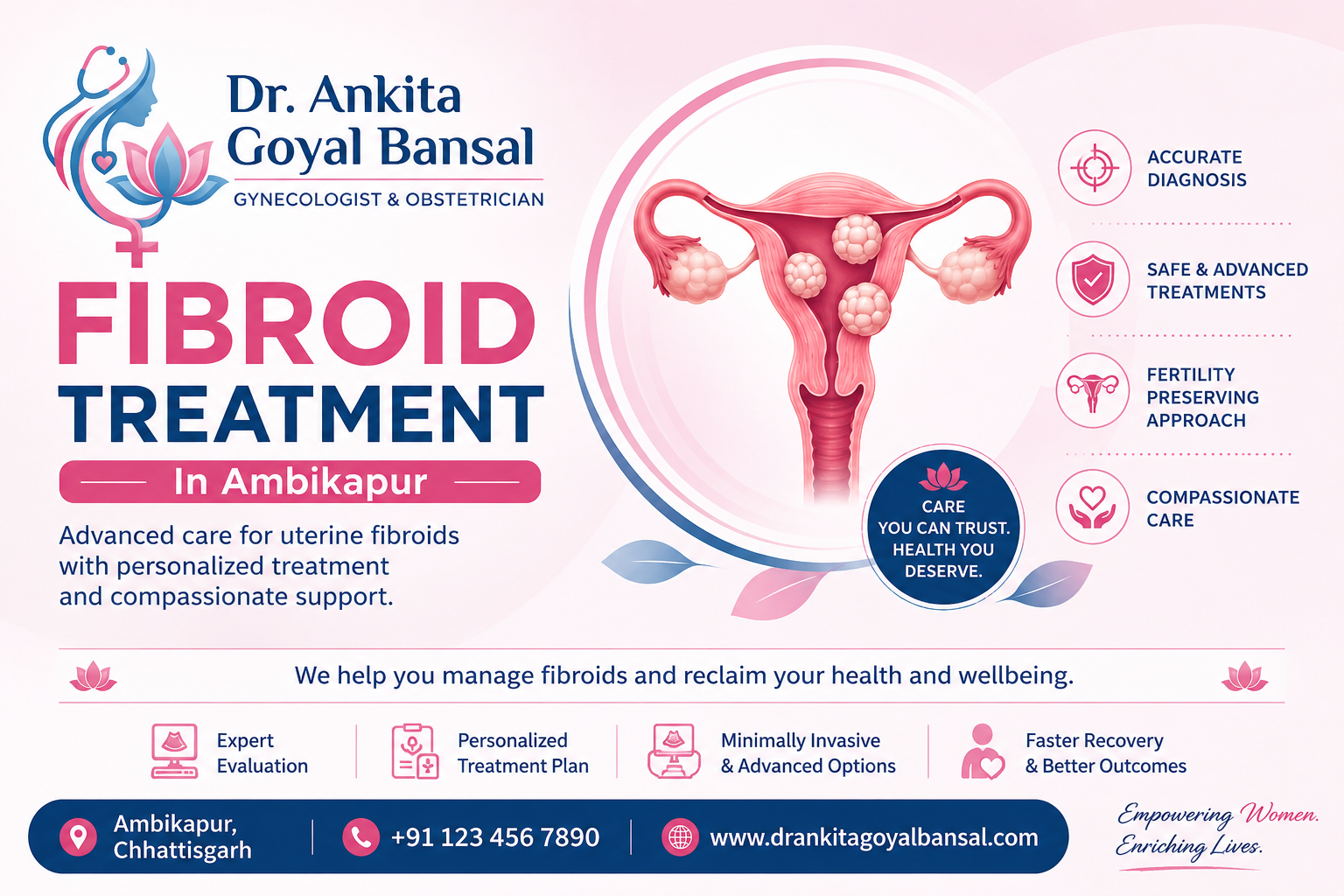
An ultrasound report saying "fibroid uterus" frightens most women far more than it should. The word sounds like a tumour, and the first thought is usually surgery, or worse, cancer. In reality, fibroids are non-cancerous, extremely common, and a large proportion of them need no treatment at all. This guide explains how to tell which situation you are in.
Quick answer: Uterine fibroids are non-cancerous growths in the wall of the uterus, affecting up to 70 percent of women by age 50. Fibroids that cause no symptoms usually need only monitoring. Surgery is advised for heavy bleeding, pain, pressure symptoms or fertility problems, and is most often done through keyhole 3D laparoscopic surgery at Sankalp Hospital, Ambikapur. Call 096912 12570.
What Are Uterine Fibroids?
Fibroids, medically called leiomyomas or myomas, are benign growths of the muscular wall of the uterus. They range from the size of a pea to larger than a melon, and a woman may have one or many. They are not cancer, and the risk of a fibroid turning malignant is extremely low, well under 1 in 1,000.
Their growth is driven by oestrogen and progesterone, which explains the pattern most women notice: fibroids tend to grow during the reproductive years, can enlarge during pregnancy, and usually shrink after menopause when hormone levels fall. Family history matters too, so if your mother or sister had fibroids, your own likelihood is higher.
By the age of 50, studies suggest up to 70 percent of women have had at least one fibroid. Most never know, because most fibroids cause no symptoms whatsoever.
Types and Why Location Matters
This is the part most patients are never told, and it matters more than size. A small fibroid in the wrong place causes far more trouble than a large one sitting quietly on the outer wall.
| Type | Where It Sits | What It Typically Causes |
|---|---|---|
| Submucosal | Bulging into the uterine cavity | Heavy bleeding, clots, difficulty conceiving, recurrent miscarriage — the most troublesome type even when small |
| Intramural | Within the muscular wall | Heavy periods, pelvic pressure, enlarged uterus; the most common type |
| Subserosal | On the outer surface | Pressure on the bladder or bowel, backache; often no bleeding problems at all |
| Pedunculated | On a stalk, inside or outside | Sudden severe pain if the stalk twists, which is a genuine emergency |
| Cervical | In the cervix | Pain during intercourse, discharge, difficulty during delivery |
So when your report says "5 cm fibroid", the useful follow-up question is not just how big, but where. That single answer usually decides whether you need treatment.
Symptoms and Warning Signs
Many fibroids are found by accident during a scan for something else. When they do cause symptoms, these are the common ones:
- Heavy or prolonged periods: soaking through protection every one to two hours, passing large clots, or bleeding beyond seven days.
- Anaemia: fatigue, breathlessness climbing stairs, palpitations and pale skin. Often the first sign that bleeding has been heavier than you realised.
- Pelvic pressure or heaviness: a persistent full feeling in the lower abdomen between periods.
- Frequent urination: or difficulty emptying the bladder fully, from pressure on the bladder.
- Constipation and bloating: when a fibroid presses on the rectum.
- Lower back or leg pain: from pressure on nerves behind the uterus.
- Pain during intercourse: depending on fibroid position.
- Visibly enlarged abdomen: swelling not explained by weight gain.
- Fertility difficulties: trouble conceiving or repeated early miscarriage, particularly with submucosal fibroids.
Sudden, severe pelvic pain with fever or vomiting needs same-day assessment rather than a routine appointment. It can indicate a twisted or degenerating fibroid.
How Fibroids Are Diagnosed
The Standard Workup
- Pelvic examination
- An enlarged or irregular uterus is often detectable clinically
- Pelvic ultrasound
- The main test, mapping number, size and exact location of each fibroid
- Haemoglobin
- Checks for anaemia from chronic blood loss; frequently low and frequently ignored
- Thyroid profile
- Excludes thyroid disease as a separate cause of heavy bleeding
- Saline sonography
- Better definition of fibroids bulging into the cavity
- Hysteroscopy
- Direct camera view inside the uterus; can diagnose and treat in one sitting
- MRI
- Reserved for large, multiple or complex cases before surgical planning
Bring every previous scan you have, even from years ago. Comparing growth over time is genuinely useful information, and a fibroid that has stayed the same size for four years is a very different situation from one that has doubled in eight months.
Do You Actually Need Surgery?
This is the question everyone arrives with, so here is a straight answer. Fibroids that cause no symptoms usually need no treatment. Watchful waiting with a scan every six to twelve months is a completely legitimate and often correct plan.
Treatment becomes genuinely necessary when:
- Bleeding is heavy enough to cause anaemia that does not correct with iron
- Pressure symptoms interfere with daily life, sleep or work
- Fibroids are distorting the uterine cavity and affecting fertility or causing recurrent miscarriage
- A fibroid is growing rapidly, or growing after menopause, which always needs evaluation
- Pain is severe or recurrent
If you are told you need a hysterectomy for a single small fibroid and you still want children, that is a reasonable moment to seek a second opinion. Uterus-preserving options exist for most women.
Treatment Options Explained
1. Watchful waiting
For symptom-free fibroids. Periodic scans, iron supplementation if needed, and no intervention. Fibroids commonly shrink on their own after menopause.
2. Medical management
Tranexamic acid and anti-inflammatories reduce bleeding during periods. Hormonal treatments, including a progesterone-releasing intrauterine device, can control heavy bleeding well where the cavity is not distorted. Iron corrects anaemia. Medicines do not remove fibroids, but for women near menopause they often bridge the gap successfully without surgery.
3. Hysteroscopic myomectomy
For submucosal fibroids inside the cavity. A camera passes through the cervix, so there are no incisions at all. Usually a day-care procedure with return to normal activity within a couple of days, and it often resolves bleeding and fertility problems dramatically.
4. Laparoscopic myomectomy
Removal of fibroids while preserving the uterus, through keyhole incisions. This is the procedure of choice for women who want to retain fertility. Using the 3D Rubina laser laparoscopic system available at Sankalp Hospital, the surgeon gains depth perception during the delicate work of repairing the uterine wall, which matters for the strength of that repair in a future pregnancy. See our fibroid treatment page for details.
5. Laparoscopic hysterectomy
Removal of the uterus, considered for women who have completed their family and have severe symptoms, very large or multiple fibroids, or fibroids that have recurred. Performed laparoscopically, it avoids the long recovery of open surgery. It is definitive: fibroids cannot return.
6. Open surgery
Still occasionally necessary for very large or numerous fibroids. Recovery is longer, typically four to six weeks, compared with one to two weeks after a keyhole approach. Ask specifically whether a laparoscopic route is possible in your case, as it usually is.
Recovery After Laparoscopic Surgery
| Timeline | What to Expect |
|---|---|
| Day 0 to 1 | Walking within hours; most patients discharged within 24 to 48 hours |
| Day 2 to 7 | Light household activity; shoulder tip discomfort from gas settles in a few days |
| Week 2 | Most women return to desk work and driving |
| Week 4 | Normal routine resumes; avoid heavy lifting |
| Week 6 | Full activity including exercise, after review |
| 3 to 6 months | Usual waiting period before attempting pregnancy after myomectomy |
Scars from keyhole surgery are typically 5 to 10 mm and fade to near-invisibility. Compare that with the recovery after open surgery and the difference in time away from family and work is substantial.
Cost and Insurance in Ambikapur
Consultation with a private gynecologist in Ambikapur generally runs ₹300 to ₹800. Ultrasound and blood tests add a few thousand rupees. Surgical costs vary considerably with the type of procedure, the number and size of fibroids, anaesthesia and length of stay, so ask for a written package estimate that states clearly what is included and what is not.
Fibroid surgery is usually covered by health insurance when medically indicated, though many policies apply a waiting period of two to four years for fibroids specifically. Get pre-authorisation before admission wherever possible. Our detailed guide on insurance coverage for laparoscopic surgery explains cashless claims and common exclusions.
Want a Clear Answer on Your Fibroid?
Bring your scan report for an honest assessment of whether you need surgery at all. Dr. Ankita Bansal Goyal (MD, FMAS – PGIMER Chandigarh) offers uterus-preserving gynecological surgery at Sankalp Hospital, Ambikapur. Mon to Sat, 9:00 AM to 5:00 PM.
Book an Appointment →Frequently Asked Questions
1. Are uterine fibroids cancerous?
No. Fibroids are benign growths. The chance of a fibroid being a cancerous leiomyosarcoma is extremely low, under 1 in 1,000. Rapid growth, or any growth after menopause, does warrant prompt evaluation.
2. Can fibroids be treated without surgery?
Yes, in many cases. Symptom-free fibroids need only monitoring. Heavy bleeding can often be controlled with medication or a hormonal intrauterine device. Surgery is reserved for significant symptoms, fertility problems or rapid growth.
3. Will I lose my uterus?
Not necessarily. Myomectomy removes fibroids while preserving the uterus and is the preferred option for women who want children. Hysterectomy is considered only for completed families with severe or recurrent disease.
4. Can I get pregnant after fibroid surgery?
Yes. Many women conceive after myomectomy, and removing a submucosal fibroid often improves fertility markedly. A gap of three to six months is generally advised before trying, to allow the uterine wall to heal fully.
5. Do fibroids come back after removal?
New fibroids can develop after myomectomy, since the underlying tendency remains. Recurrence is more likely in younger women and where multiple fibroids were removed. Hysterectomy is the only option after which fibroids cannot return.
6. How fast do fibroids grow?
Most grow slowly over years. Growth is faster during pregnancy and slows after menopause. Rapid enlargement over a few months should always be assessed rather than watched.
7. Does diet shrink fibroids?
No diet removes an existing fibroid. However, maintaining a healthy weight, correcting anaemia with iron-rich food, and limiting alcohol supports overall management and reduces symptom severity. Be sceptical of products claiming to dissolve fibroids.
8. Where can I get fibroid surgery in Ambikapur?
Dr. Ankita Bansal Goyal performs laparoscopic myomectomy and hysterectomy at Sankalp Hospital, Bilaspur Road, behind District Hospital, Ambikapur, using Ambikapur's first 3D laparoscopic system. Call or WhatsApp 096912 12570 to book.