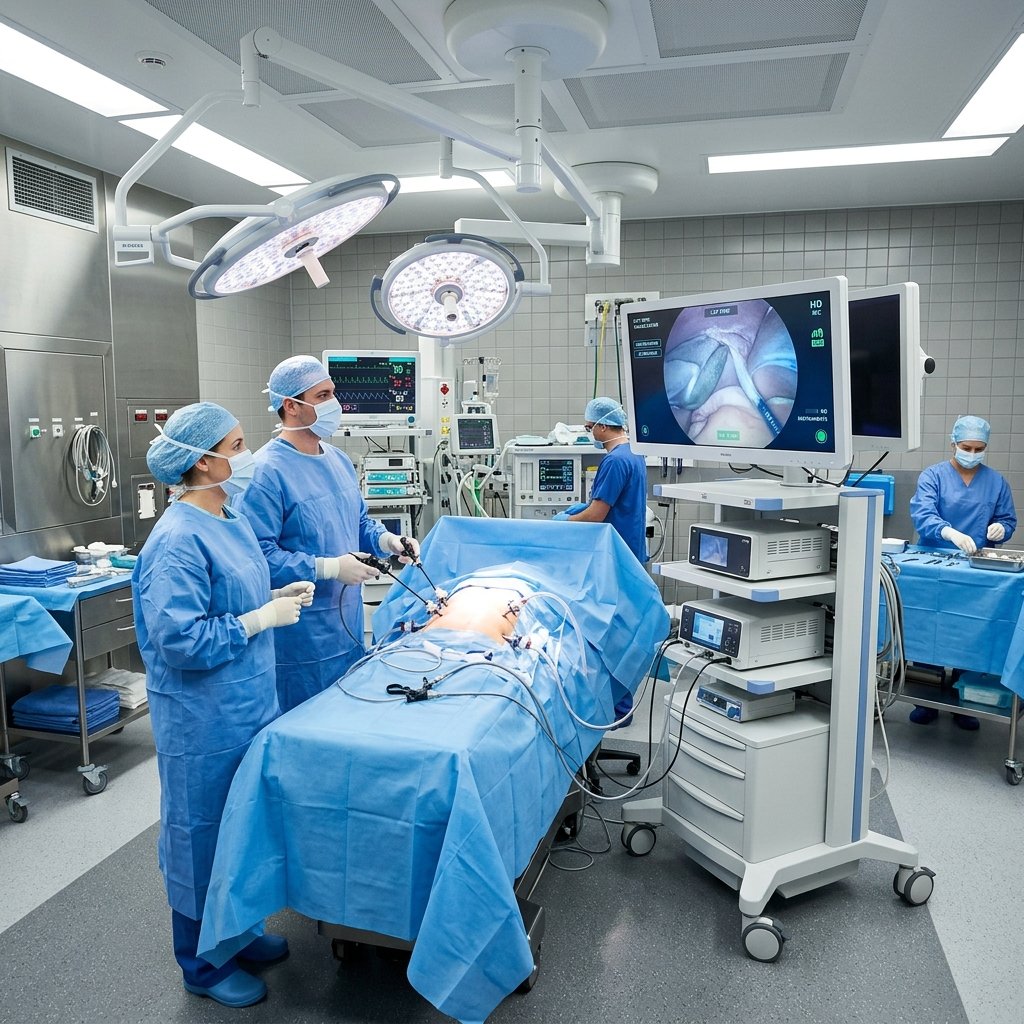
Laparoscopy is often touted as a miracle of modern medicine, significantly reducing recovery times and surgical complications. But exactly how is this minimally invasive technique executed in the operating room? Let’s walk through the procedure.
Pre-Surgical Preparation
Before any surgical intervention, thorough preparation is crucial. Your surgeon will conduct a full physical examination, review medical history, and order necessary imaging like MRIs or ultrasounds. You’ll be asked to fast (no food or water) for 8 to 12 hours prior to the surgery. If you are preparing for expert gynecological surgery, you will have a clear, customized pre-operative checklist.
The Step-by-Step Procedure
Once you are in the operating room, the process generally follows these meticulous steps:
- Anesthesia Administration: A specialized anesthesiologist will administer general anesthesia, ensuring you are entirely asleep and pain-free.
- Initial Incision & Inflation: The surgeon makes a tiny incision near or inside the navel. A small tube (cannula) is inserted, through which carbon dioxide gas is pumped into the abdomen. This inflates the abdominal cavity, providing the surgeon with a clear working space and separating the abdominal wall from the organs.
- Camera Insertion: The laparoscope (a HD camera) is inserted through this port, beaming live video to large monitors in the operating suite.
- Secondary Incisions: One to three additional tiny "keyhole" incisions are made lower down on the abdomen. Through these ports, specialized, long-handled surgical instruments are introduced. For example, during a laparoscopic ovarian cyst removal, precision scissors and graspers are used.
- The Core Procedure: The surgeon performs the delicate work—such as extracting fibroids during minimally invasive fibroid treatment or assessing tissue for specialized endometriosis care—by watching the high-resolution monitor.
- Extraction and Closure: Once the surgical goals are achieved, any removed tissue is carefully extracted. The carbon dioxide gas is gently released, and the tiny incisions are closed using dissolving sutures or surgical tape/glue.
Advanced Equipment Used
Laparoscopy relies on cutting-edge technology. High-intensity cool-light sources, ultra-high-definition screens, and specialized micro-instruments are standard. Some top facilities now use advanced 3D laparoscopic surgery equipment, which grants the surgeon incredible depth perception, making complex procedures even safer and more precise.
Have Questions About the Procedure?
Schedule an appointment with Dr. Ankita Bansal Goyal to understand exactly how laparoscopy can address your health concerns safely.
Schedule Your Visit →Frequently Asked Questions
1. Will I be awake during the surgery?
No, you will be under general anesthesia for the duration of the procedure, ensuring you do not feel any pain or discomfort.
2. Why is carbon dioxide gas used to inflate my abdomen?
Carbon dioxide is used because it is safe, non-toxic, non-flammable, and easily absorbed and cleared by the body after surgery.
3. Are the cameras really that small?
Yes, the laparoscope is typically just 5 to 10 millimeters thick, allowing it to easily slip through a very small incision.
4. How are large fibroids or organs removed through tiny incisions?
Surgeons often use specialized instruments like morcellators to safely break down larger tissue into smaller pieces before carefully extracting them in secure surgical bags.
5. Do I need a catheter during laparoscopy?
Often, a urinary catheter is placed temporarily while you are asleep to keep the bladder empty and safe during surgery. It is usually removed before or shortly after you wake up.
6. Will I need breathing assistance while asleep?
Yes, an endotracheal tube is gently placed in your windpipe while you are asleep to assist your breathing and maintain optimal oxygen levels.
7. How long does the actual surgery take?
Depending on complexity, the operating time ranges from 30 minutes for diagnostics to 2-3 hours for comprehensive tumor/fibroid excisions.