If a scan has shown a fibroid, an ovarian cyst or endometriosis, the next question is usually about the operation. Most women in Chhattisgarh are still offered open surgery, with a long cut, a week in hospital and six weeks of recovery. Keyhole surgery changes all three of those numbers, and 3D laparoscopy improves on standard keyhole surgery again. This guide explains what to look for in a surgeon and what the technology actually does.
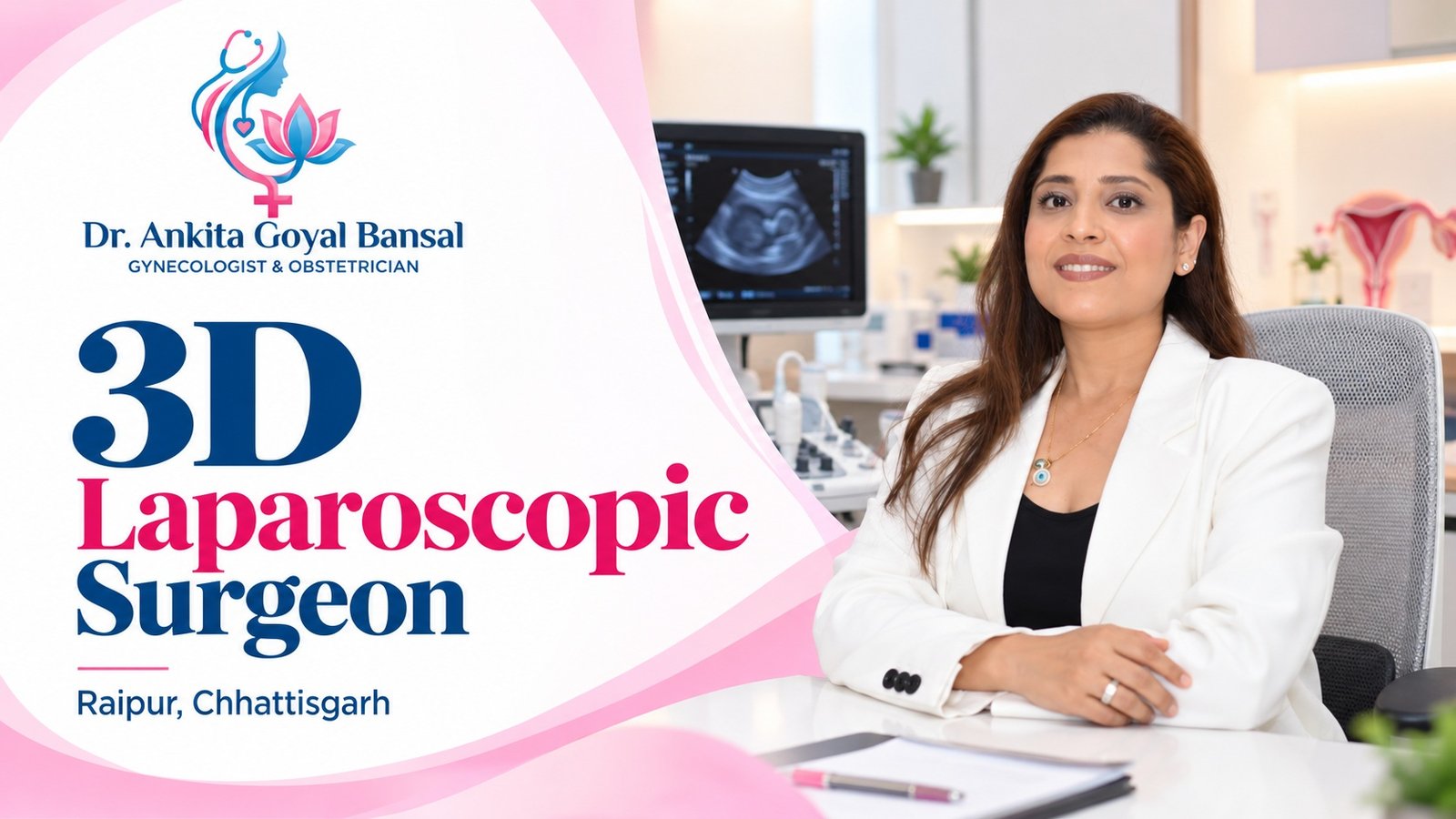
Quick answer: 3D laparoscopy is keyhole surgery performed with a two-lens camera that restores depth perception, so the surgeon can judge distance accurately instead of working on a flat screen. Dr. Ankita Bansal Goyal (MD, FMAS, PGIMER Chandigarh) performs 3D laparoscopic gynaecological surgery on the Rubina laser system at Sankalp Hospital, Ambikapur, for patients from across Chhattisgarh including Raipur. Call 096912 12570.
What Makes 3D Laparoscopy Different?
In any laparoscopic operation, the surgeon works through three or four incisions of 5 to 10 mm, watching a screen rather than looking directly into the abdomen. The difference is in what that screen shows.
A standard laparoscope has one lens and produces a flat, two-dimensional picture. The surgeon has to infer depth from shadows, movement and years of experience. A 3D laparoscope has two lenses set slightly apart, exactly like human eyes, and feeds each eye a separate image through polarised glasses. The result is true depth perception.
That matters most in the fiddly parts of an operation: separating a fibroid from healthy muscle, stitching the uterine wall closed, or working near the ureter and large blood vessels. Studies of 3D versus 2D laparoscopy consistently report faster suturing and fewer errors, particularly for complex reconstruction. For a woman planning a pregnancy after a myomectomy, the quality of that uterine repair is not a technical detail. It is what the scar will have to hold against during labour.
How to Choose a Laparoscopic Surgeon
Technology is the easy part to advertise. These are the questions that actually separate surgeons:
- Formal minimal access training. FMAS (Fellowship in Minimal Access Surgery) is a recognised qualification. Ask what training the surgeon has beyond their MS or MD.
- Volume in your specific operation. A surgeon who does a myomectomy monthly is in a different position from one who does a few a year. It is a fair question to ask.
- Conversion rate. Sometimes a keyhole operation has to be converted to open surgery mid-procedure. A good surgeon will tell you honestly how often that happens and why.
- Who operates on the day. In some setups the consultant you met is not the one holding the instruments. Confirm this.
- Emergency cover. If a complication appears at 2 AM on day two, who is available and what facilities does the hospital have?
- A written estimate. Before admission, in writing, with a clear statement of what is included.
Be cautious of any surgeon who recommends removing the uterus for a problem that has uterus-preserving options, especially if you may want children. A second opinion costs one consultation fee.
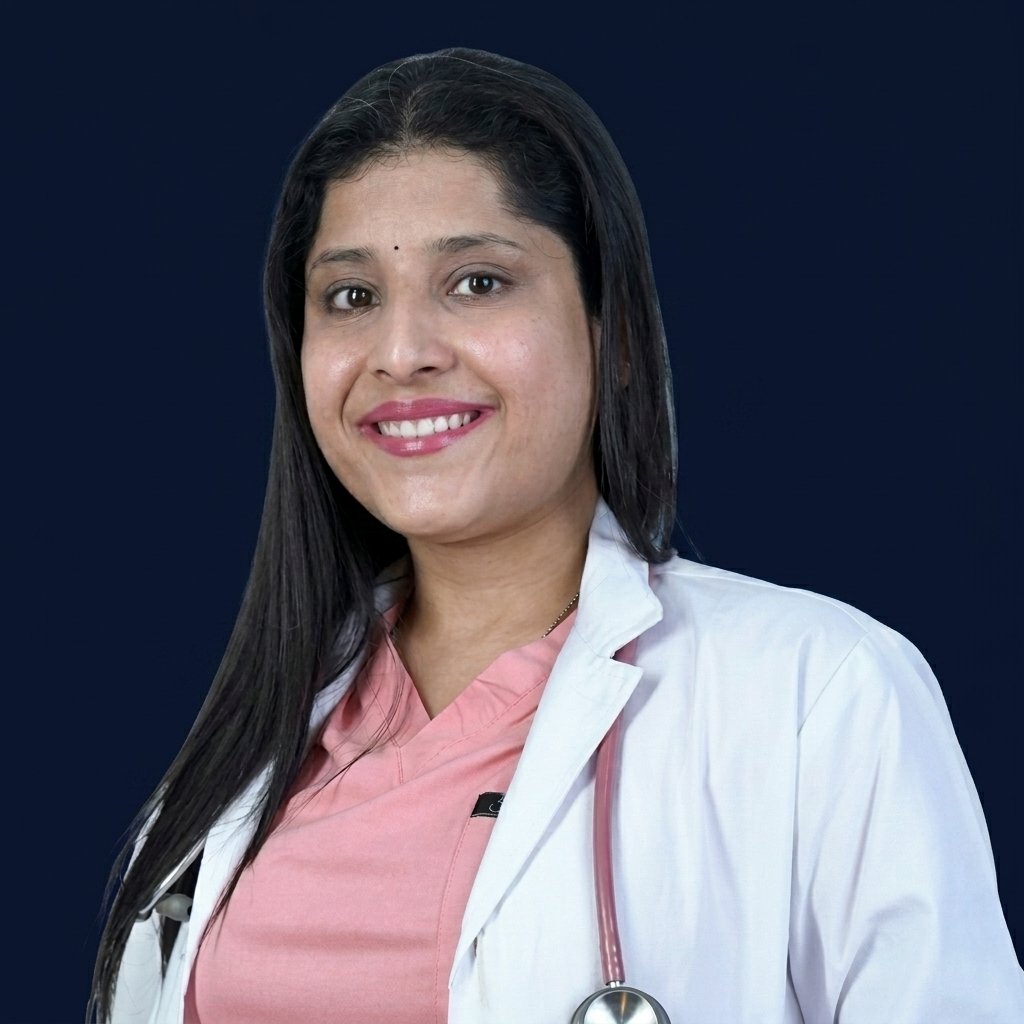
About Dr. Ankita Bansal Goyal
Surgeon Profile
- Qualifications
- M.D. and FMAS from PGIMER Chandigarh
- Speciality
- Obstetrics, Gynaecology and 3D Laparoscopic Minimal Access Surgery
- Experience
- 15+ years of clinical practice
- Hospital
- Sankalp Hospital, Bilaspur Road, behind District Hospital, Ambikapur, Chhattisgarh 497001
- Equipment
- 3D Rubina laser laparoscopic system with fluorescence imaging
- OPD
- Monday to Saturday, 9:00 AM to 5:00 PM
- Contact
- 096912 12570
PGIMER Chandigarh is one of India's leading postgraduate medical institutes, and the FMAS fellowship is specific training in minimal access technique rather than a general surgical qualification. The emphasis in practice is on uterus-preserving surgery wherever it is clinically reasonable.
Procedures Performed
Gynaecological conditions treated through the laparoscopic route include:
- Laparoscopic myomectomy: removing fibroids while keeping the uterus intact
- Laparoscopic hysterectomy: removal of the uterus through keyhole incisions
- Ovarian cystectomy: removing a cyst while preserving healthy ovarian tissue
- Endometriosis surgery: excision of deposits and release of adhesions
- Diagnostic laparoscopy and dye test: assessing the tubes in infertility
- Ectopic pregnancy surgery and ovarian drilling for selected PCOS cases
- Hysteroscopic procedures: polyp or submucosal fibroid removal with no abdominal incision at all
The 3D Rubina Laser System
Sankalp Hospital runs the first 3D Rubina laser laparoscopic system in Ambikapur. Two features matter clinically.
4K and 3D imaging. Higher resolution combined with depth perception. The comparison patients find easiest is phone cameras: a photo from a high-megapixel sensor shows detail a basic camera simply cannot capture. Inside the abdomen, that detail is tissue planes, small vessels and the exact edge of a lesion.
Fluorescence imaging. A dye is injected and viewed under a special light, making blood supply visible in real time. The surgeon can see whether tissue is receiving blood before deciding what to cut or preserve, and can identify structures such as the ureter more confidently.
None of this replaces surgical judgement. It gives a well-trained surgeon better information to act on.
Recovery After Keyhole Surgery
| Stage | Laparoscopic | Open Surgery |
|---|---|---|
| Incision | Three or four cuts of 5 to 10 mm | One cut of 10 to 15 cm |
| Walking | Within hours | Day two or three |
| Hospital stay | 24 to 48 hours | 5 to 7 days |
| Back to desk work | About 2 weeks | 4 to 6 weeks |
| Full activity | About 6 weeks | 8 to 12 weeks |
| Scarring | Small marks that usually fade | A permanent visible scar |
One quirk catches most patients by surprise: shoulder tip pain in the first two or three days. Carbon dioxide gas used to inflate the abdomen irritates the diaphragm, which shares a nerve supply with the shoulder. It is harmless, and walking helps clear it faster than lying still.
Cost and Insurance
Laparoscopic surgery often has a higher theatre cost than open surgery because of the equipment, but the total is frequently similar or lower once the shorter stay, lower medication use and faster return to work are counted. Costs vary with the procedure, the number and size of fibroids, anaesthesia and length of stay.
Most health insurance policies cover laparoscopic gynaecological surgery when it is medically indicated, though many apply a waiting period of two to four years for conditions such as fibroids. Arrange pre-authorisation before admission where possible. Our detailed guide on insurance coverage for laparoscopic surgery explains cashless claims and the common exclusions.
Travelling From Raipur: What to Plan
Raipur has several hospitals offering laparoscopic gynaecological surgery, and for many women the right answer is the nearest competent surgeon. Patients do travel across the state for a particular surgeon or a particular technology, and if you are considering that journey, plan it properly.
Sankalp Hospital is in Ambikapur, roughly 350 km north of Raipur by road via Bilaspur or Korba, usually a seven to eight hour drive. Practical points:
- Send your scan reports and previous prescriptions by WhatsApp first, so an initial opinion can be given before you travel
- Book a morning slot so consultation, scan and blood tests finish the same day
- Ask for the surgical estimate in writing at the consultation, not later
- Plan accommodation for the attendant for two to three nights around the surgery date
- Carry all old films, not just the reports; comparison over time matters
If travelling is not practical, that is a reasonable conclusion. What matters is that you see a surgeon with formal minimal access training rather than accepting open surgery as the only option, since many procedures offered as open surgery can be done through keyhole incisions.
Been Advised Open Surgery?
It is worth asking whether a keyhole approach is possible in your case. Send your reports for a second opinion, or book a consultation for 3D laparoscopic surgery at Sankalp Hospital, Ambikapur. Monday to Saturday, 9:00 AM to 5:00 PM.
Book an Appointment →Frequently Asked Questions
1. What is 3D laparoscopic surgery?
It is keyhole surgery performed with a two-lens camera that gives the surgeon true depth perception instead of a flat image. This improves accuracy during delicate steps such as separating tissue planes and stitching the uterine wall.
2. Is 3D laparoscopy better than standard 2D laparoscopy?
For complex procedures involving suturing and fine dissection, 3D has measurable advantages in speed and accuracy. For straightforward operations, an experienced surgeon achieves excellent results with either. The surgeon's training matters more than the equipment.
3. Where can I find a 3D laparoscopic surgeon for Raipur patients?
Several hospitals in Raipur offer laparoscopic gynaecological surgery. Dr. Ankita Bansal Goyal operates the 3D Rubina laser system at Sankalp Hospital, Ambikapur, and sees patients from across Chhattisgarh. Send reports on WhatsApp to 096912 12570 for an opinion before travelling.
4. How long does recovery take?
Most patients go home within 24 to 48 hours, return to desk work at about two weeks and resume full activity including exercise at around six weeks. Open surgery typically needs four to six weeks before returning to work.
5. Can I have a baby after laparoscopic fibroid surgery?
Yes. Myomectomy preserves the uterus specifically so that pregnancy remains possible. A gap of three to six months is usually advised before trying, to let the uterine wall heal fully.
6. Why do I get shoulder pain after the operation?
Carbon dioxide gas used to inflate the abdomen irritates the diaphragm, which shares a nerve supply with the shoulder. It is harmless and settles within a few days. Gentle walking helps the gas clear faster.
7. Does insurance cover laparoscopic surgery?
Usually yes, when the surgery is medically indicated, but many policies apply a waiting period of two to four years for conditions like fibroids. Get pre-authorisation before admission and ask the hospital for a written estimate.
8. How do I get a second opinion before deciding?
Send your ultrasound report, any MRI, and previous prescriptions on WhatsApp to 096912 12570. An initial view on whether a keyhole approach is suitable can usually be given before you travel for a full consultation.