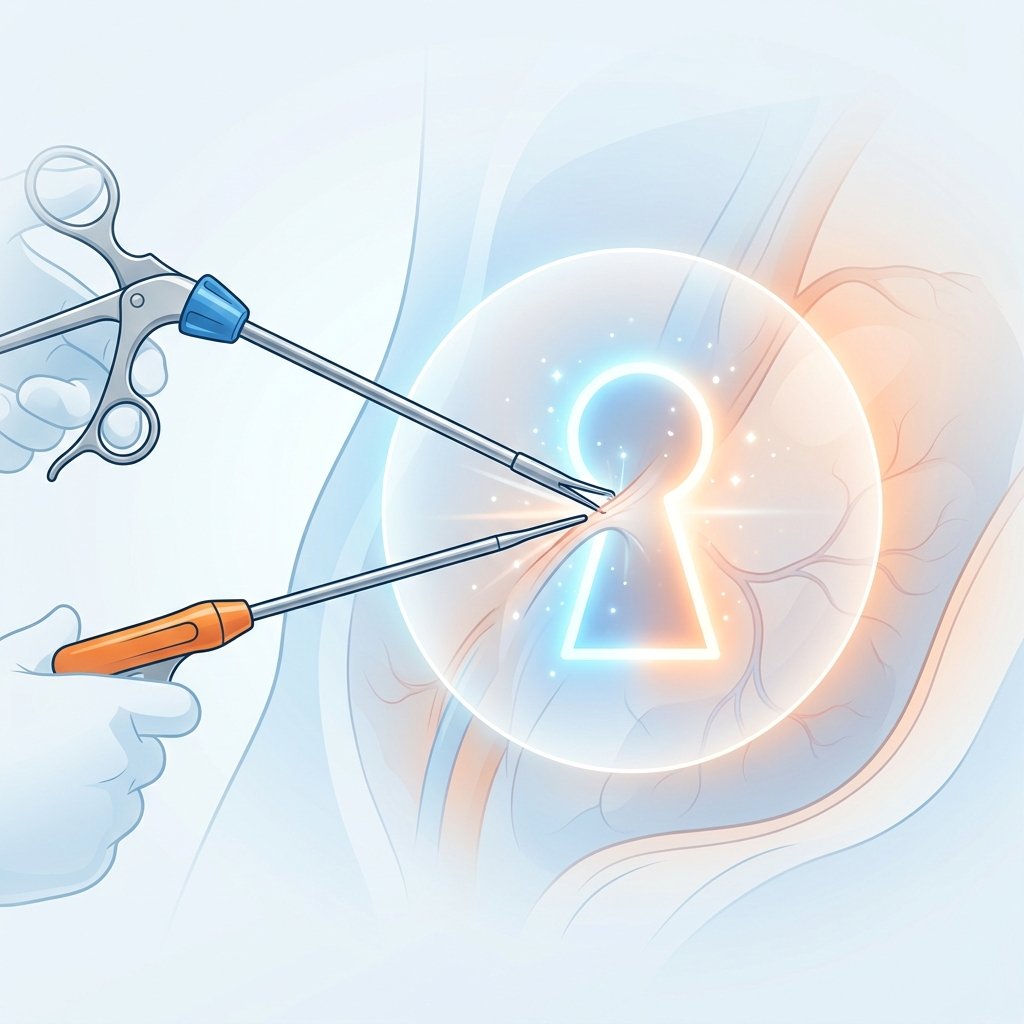
Laparoscopic surgery has revolutionized the field of medicine by offering a modern alternative to traditional open surgery. But what exactly is it, and why is it highly recommended by top specialists?
Meaning of Laparoscopic Surgery
Laparoscopic surgery, commonly referred to as "keyhole surgery," is a minimally invasive surgical technique. Rather than making a large incision to access the internal organs, the surgeon makes several tiny incisions, typically 0.5 to 1.5 cm long. A specialized instrument called a laparoscope—a slender tube equipped with a high-intensity light and a high-resolution camera—is inserted through one of these incisions. This camera transmits real-time images to a monitor, allowing the surgeon to operate with tremendous precision. For unparalleled clarity, many top-tier clinics now employ advanced 3D laparoscopic surgery.
Uses in Gynecology
In gynecology, laparoscopy is utilized both for accurately diagnosing conditions and for performing complex surgical treatments. Common uses include:
- Diagnosing unexplained pelvic pain or infertility issues.
- Performing minimally invasive fibroid treatment to remove symptomatic uterine fibroids without a large scar.
- Conducting laparoscopic ovarian cyst removal safely and effectively.
- Providing specialized endometriosis care by excising endometrial tissue.
- Performing hysterectomies and treating ectopic pregnancies.
Seeking Minimally Invasive Surgery Options?
Get personalized guidance from Dr. Ankita Bansal Goyal, Ambikapur’s premier laparoscopic expert, and experience safer, faster healing.
Book Your Consultation →Key Benefits
The benefits of choosing laparoscopic surgery over open surgery are substantial and life-changing for many patients:
- Reduced Scarring: Smaller incisions mean less noticeable scars.
- Faster Recovery: Patients usually return to normal activities much faster.
- Less Pain: Minimal tissue trauma results in significantly decreased post-operative pain.
- Lower Infection Risk: Small incisions drastically reduce the risk of wound infections.
- Shorter Hospital Stays: Many procedures are performed on an outpatient basis or require merely a 24-hour stay.
Consulting with an expert for expert gynecological surgery ensures you receive these benefits in full.
Frequently Asked Questions
1. Why is it called "keyhole" surgery?
Because the incisions made are so small—often no larger than a keyhole—through which specialized instruments are inserted.
2. Is laparoscopy painful?
You will be under general anesthesia during the surgery and feel no pain. Post-surgery pain is minimal compared to open surgery.
3. Are stitches required?
Yes, but typically only 1 or 2 small stitches (or surgical glue/tape) per incision, many of which dissolve on their own.
4. How long does a diagnostic laparoscopy take?
A purely diagnostic procedure without major tissue removal typically takes about 30 to 45 minutes.
5. Can all surgeries be done laparoscopically?
While extremely versatile, highly complex or extensive cancers may still require open surgery. An expert consultation is necessary to decide.
6. Will I have a large scar?
No. The scarring is minimal and often fades significantly, leaving only tiny marks.
7. Does health insurance cover laparoscopy?
Yes, if the laparoscopy is deemed medically necessary (e.g., removing fibroids or cysts), most health insurance plans will cover it.