Across much of Surguja, a woman told she needs fibroid surgery or a hysterectomy is still offered the same operation her mother would have had: a long abdominal cut, a week in hospital and six weeks off work. For a family where the daily wage stops when she stops, those six weeks are not a medical detail. They are the household budget. Keyhole surgery changes that number, and it is available in the district.
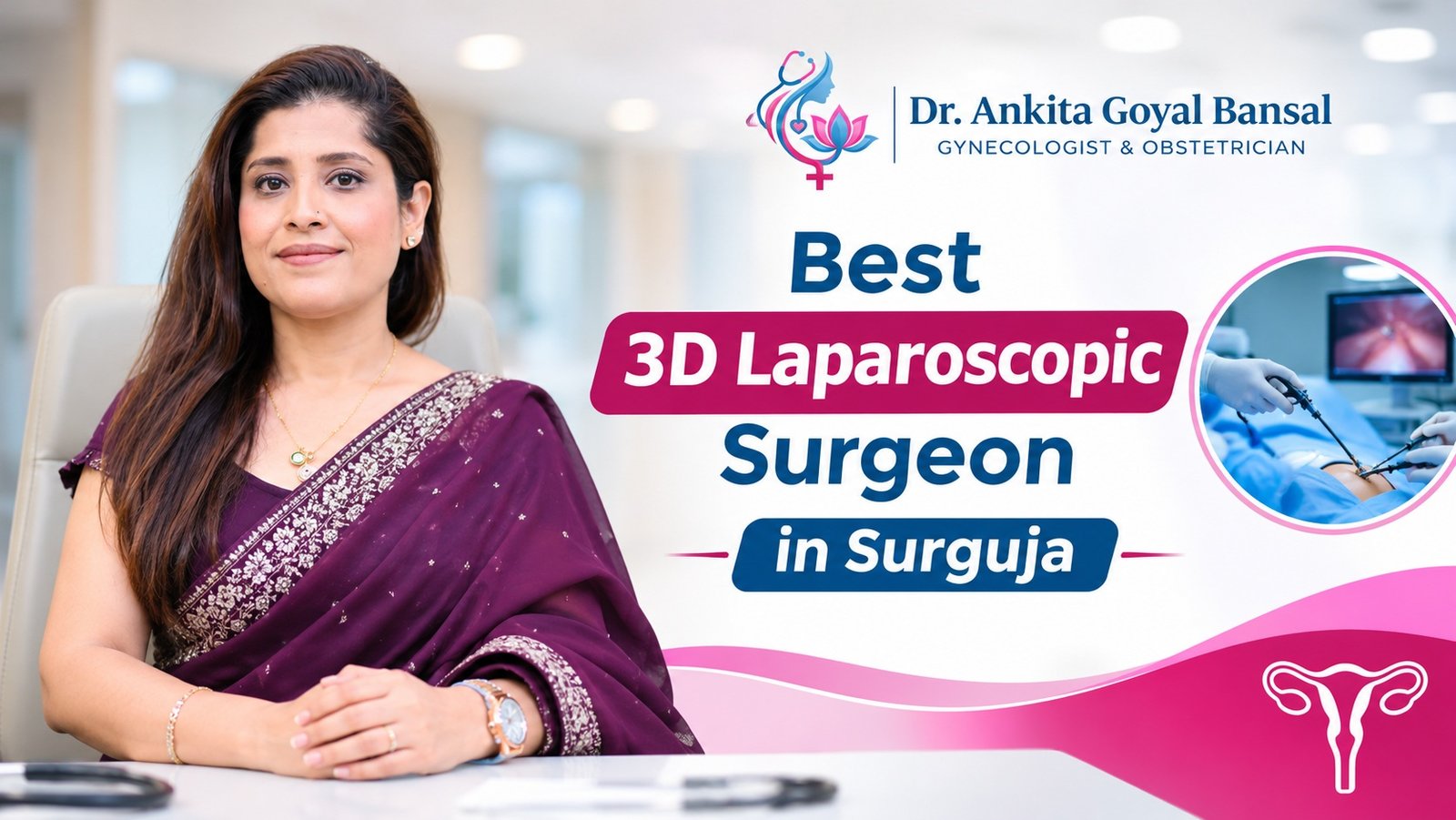
Quick answer: 3D laparoscopy is keyhole surgery performed through three or four incisions of 5 to 10 mm, using a two-lens camera that gives the surgeon true depth perception. Most patients go home within 24 to 48 hours and return to work in about two weeks, against four to six after open surgery. Dr. Ankita Bansal Goyal (MD, FMAS, PGIMER Chandigarh) operates the 3D Rubina laser system at Sankalp Hospital, Ambikapur. Call 096912 12570.
Why Keyhole Surgery Matters Here
The case for minimal access surgery is usually made in terms of smaller scars, which badly undersells it. In a district like Surguja the real benefits are practical:
- Time away from work. Two weeks instead of six is the difference between a manageable gap and a serious loss of household income.
- Less blood loss. This matters in a region where anaemia is widespread and blood availability can be limited.
- Lower infection risk. Small incisions in a humid climate, with a shorter stay, mean fewer wound problems after the patient goes home to a village where follow-up is difficult.
- Fewer adhesions. Internal scar tissue after open surgery can cause pain and fertility problems years later.
- Less attendant burden. Two days of a family member's time rather than a week, which matters when they have travelled from a block two hours away.
For a woman who has already travelled a long distance to reach hospital, going home on day two instead of day seven is not a luxury.
What Makes 3D Laparoscopy Different
In any laparoscopic operation the surgeon works through small incisions while watching a screen. The difference lies in what that screen shows.
A standard laparoscope has one lens and produces a flat, two-dimensional picture, so the surgeon infers depth from shadows, movement and experience. A 3D laparoscope has two lenses set slightly apart, like human eyes, feeding each eye a separate image through polarised glasses. The result is genuine depth perception.
That matters most in the fiddly parts of an operation: separating a fibroid from healthy muscle along the right plane, stitching the uterine wall closed, or working near the ureter and large vessels. For a woman planning a pregnancy after a myomectomy, the quality of that uterine repair is not a technical nicety. It is what the scar has to hold against during labour.
The system at Sankalp Hospital adds two things to the 3D view. 4K resolution, which shows tissue planes and small vessels a standard camera cannot resolve. And fluorescence imaging, where a dye viewed under a specific light shows blood supply live, so the surgeon can confirm tissue is perfused before deciding what to cut or preserve.
None of this replaces surgical judgement. It gives a well-trained surgeon better information to act on.
Conditions Treated by Keyhole Surgery
| Condition | Laparoscopic Procedure |
|---|---|
| Uterine fibroids | Myomectomy, preserving the uterus, or hysterectomy if the family is complete |
| Ovarian cysts | Cystectomy, removing the cyst while sparing healthy ovarian tissue |
| Endometriosis | Excision of deposits, release of adhesions, treatment of chocolate cysts |
| Heavy bleeding or prolapse | Total laparoscopic hysterectomy |
| Infertility | Diagnostic laparoscopy with tubal dye test, adhesiolysis |
| Ectopic pregnancy | Emergency surgery to remove the pregnancy and, where possible, save the tube |
| PCOS not responding to medicine | Ovarian drilling, in selected cases only |
| Polyps, submucosal fibroids | Hysteroscopic removal, with no abdominal incision at all |
How to Judge a Surgeon
Every hospital advertises advanced laparoscopic facilities. Owning a laparoscope is not the same as being trained to use it well. These are the distinctions that matter:
- Formal fellowship training. FMAS, the Fellowship in Minimal Access Surgery, is a recognised qualification taken after a postgraduate degree. A surgeon with MS or MD alone may have learned laparoscopy informally, and that varies enormously in depth.
- Volume in your specific operation. Laparoscopic suturing is a skill that decays without regular practice. Asking how often the surgeon performs your particular procedure is a fair question.
- Honesty about conversion. Every laparoscopic surgeon occasionally converts to open surgery for safety. One who claims never to convert is either inexperienced or not being straight with you.
- A preference for preserving the uterus where that is clinically reasonable, especially if you may want children.
- Continuity. The person who consults you should be the person who operates.
- Written costs before admission, including what happens if the surgery takes longer than planned.
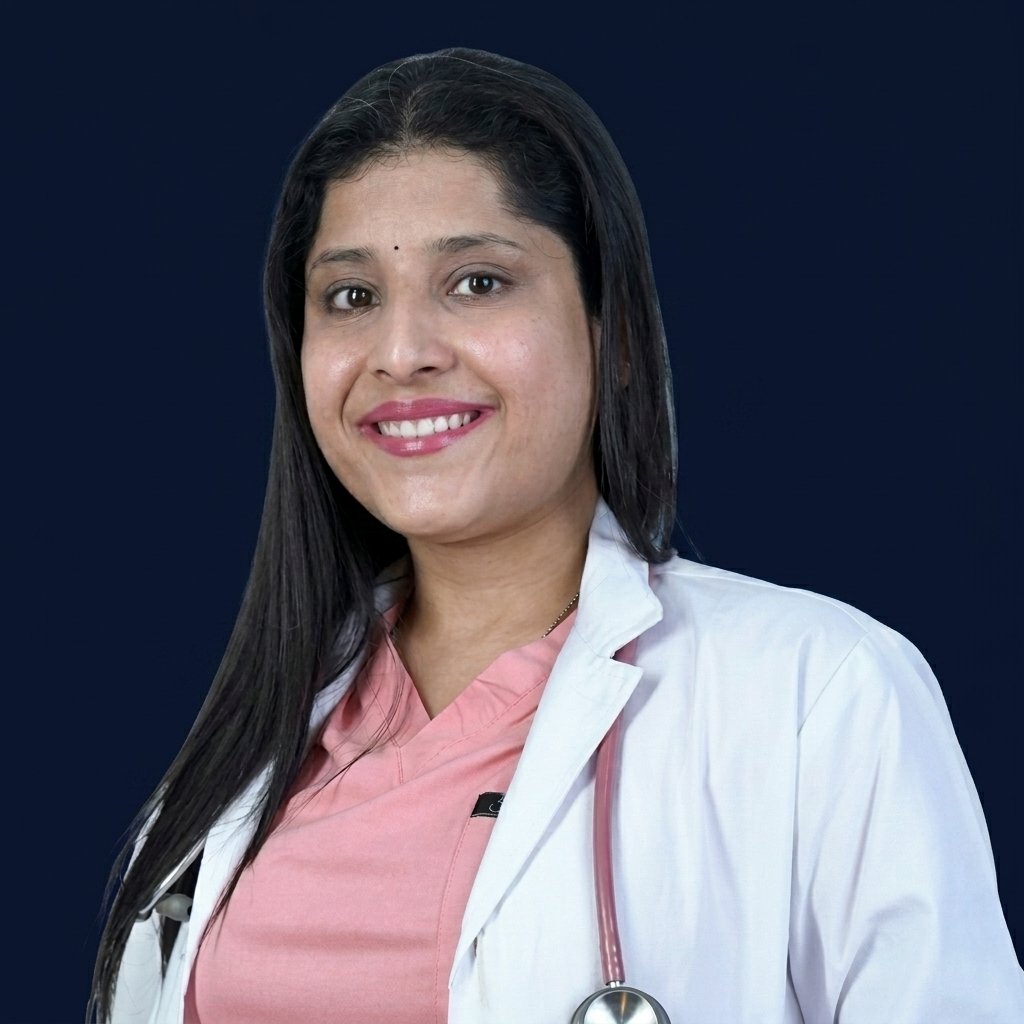
Dr. Ankita Bansal Goyal: Credentials
Surgeon Profile
- Qualifications
- M.D. and FMAS from PGIMER Chandigarh
- Speciality
- Obstetrics, Gynaecology and 3D Laparoscopic Minimal Access Surgery
- Experience
- 15+ years of clinical practice
- Hospital
- Sankalp Hospital, Bilaspur Road, behind District Hospital, Ambikapur, Chhattisgarh 497001
- Equipment
- 3D Rubina laser system with 4K and fluorescence imaging
- OPD timings
- Monday to Saturday, 9:00 AM to 5:00 PM
- Emergency
- Obstetric emergencies attended round the clock
- Contact
- 096912 12570
PGIMER Chandigarh is among India's leading postgraduate medical institutes. The FMAS fellowship is training specifically in minimal access technique rather than a general surgical degree, and that is the distinction worth looking for in any surgeon, here or anywhere else.
Recovery Compared With Open Surgery
| Factor | Laparoscopic | Open Surgery |
|---|---|---|
| Incision | Three or four cuts of 5 to 10 mm | One cut of 10 to 15 cm |
| Blood loss | Usually minimal | Noticeably higher |
| Hospital stay | 24 to 48 hours | 5 to 7 days |
| Pain | Less, shorter painkiller use | More, often needing stronger medication |
| Return to work | About 2 weeks | 4 to 6 weeks |
| Infection risk | Lower | Higher |
| Internal adhesions | Fewer | More common |
| Scarring | Small marks that usually fade | A permanent visible scar |
One quirk surprises most patients: shoulder tip pain in the first two or three days. Carbon dioxide gas used to inflate the abdomen irritates the diaphragm, which shares a nerve supply with the shoulder. It is harmless, and walking clears it faster than lying still.
Open surgery remains the right choice in some situations, including a very large fibroid uterus, extensive adhesions from previous operations, suspected cancer, or an unstable emergency. A good surgeon says so plainly rather than attempting a keyhole approach that should not be attempted. Our guide comparing laparoscopy and open surgery goes into more detail.
Cost, Insurance and Planning
Laparoscopic surgery often carries a higher theatre cost than open surgery because of the equipment, but the total is frequently similar or lower once the shorter stay, reduced medication and faster return to work are counted. Costs vary with the procedure, the number and size of fibroids, anaesthesia and length of stay, so ask for a written package estimate that states clearly what is included and what is not. Our guide on laparoscopic surgery cost in India sets out the usual components.
Most health insurance policies cover laparoscopic gynaecological surgery when it is medically indicated, though many apply a waiting period of two to four years for conditions such as fibroids. Arrange pre-authorisation before admission where possible. The detailed guide on insurance coverage for laparoscopic surgery explains cashless claims and common exclusions.
If you are coming from Lundra, Sitapur, Batauli, Mainpat, Udaipur or further afield in Surajpur, Balrampur or Jashpur, send your scan reports on WhatsApp before travelling, so you know whether surgery is even likely before you make the journey. Plan two to three nights of accommodation for an attendant around a surgery date.
Questions to Ask Before You Consent
- Can this be done laparoscopically, and if not, why not in my case?
- Can my uterus or ovary be preserved?
- How many of these operations do you perform in a year?
- What is the chance of converting to open surgery?
- Who will perform the surgery, and who covers emergencies afterwards?
- What is the total estimated cost, in writing?
- How soon can I travel home, and when can I return to work?
- If I want a pregnancy later, how long should I wait?
A surgeon who welcomes these questions is usually the one to trust. Taking the written estimate and the answers to a second opinion is reasonable and is not an insult to anyone.
Been Advised Open Surgery?
It is worth asking whether a keyhole approach is possible in your case. Send your reports for an opinion, or book a consultation for 3D laparoscopic surgery at Sankalp Hospital, Ambikapur. Monday to Saturday, 9:00 AM to 5:00 PM.
Book an Appointment →Frequently Asked Questions
1. Is keyhole surgery available in Surguja district?
Yes. Dr. Ankita Bansal Goyal performs 3D laparoscopic gynaecological surgery on the Rubina laser system at Sankalp Hospital, Ambikapur, the district headquarters. Fibroid removal, hysterectomy, ovarian cyst removal and endometriosis surgery can all be done through keyhole incisions.
2. What is 3D laparoscopic surgery?
Keyhole surgery performed with a two-lens camera that gives the surgeon true depth perception instead of a flat image. This improves accuracy during delicate steps such as separating tissue planes and stitching the uterine wall.
3. How long is recovery?
Most patients go home within 24 to 48 hours, return to desk work at about two weeks and resume full activity including exercise at around six weeks. Open surgery typically needs four to six weeks before returning to work.
4. What does FMAS mean?
Fellowship in Minimal Access Surgery, a recognised qualification in keyhole surgical technique taken after a postgraduate degree. It indicates formal training rather than laparoscopic skills picked up informally.
5. Can I have a baby after laparoscopic fibroid surgery?
Yes. Myomectomy preserves the uterus specifically so that pregnancy remains possible. A gap of three to six months is usually advised before trying, to let the uterine wall heal fully.
6. Will I need a blood transfusion?
Laparoscopic surgery usually involves minimal blood loss, so transfusion is uncommon. If you are anaemic beforehand, correcting your haemoglobin with iron first reduces the risk further and is worth doing in advance.
7. When is open surgery still the better choice?
For a very large fibroid uterus, extensive adhesions from previous operations, suspected cancer, or an unstable emergency. A good surgeon recommends open surgery honestly in those situations rather than attempting an unsafe keyhole approach.
8. Can I get an opinion before travelling to Ambikapur?
Yes. Send your ultrasound report, any MRI and previous prescriptions on WhatsApp to 096912 12570. An initial view on whether a keyhole approach is suitable can usually be given before you make the journey from your block.