Chhattisgarh is a large state with its specialists unevenly spread. Raipur has a wide choice, Bilaspur and Durg have a reasonable one, and the northern and southern districts have far fewer. Most guides written for the state ignore that completely and name a single best doctor. This one takes the opposite approach: it tells you what good care looks like, where it is realistically available, and when travelling is actually worth it.
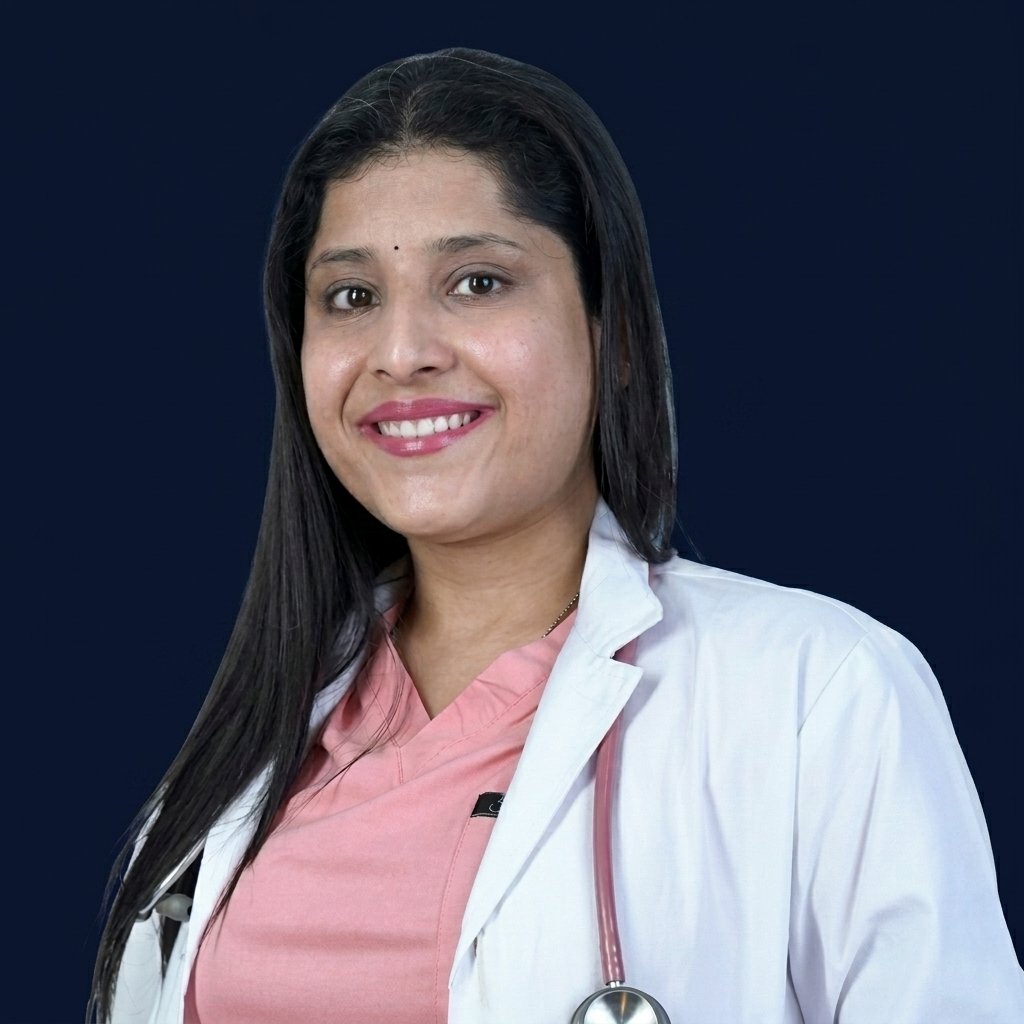
Quick answer: Judge a gynecologist on four things wherever you live in Chhattisgarh: an MS or MD in Obstetrics and Gynaecology plus any surgical fellowship such as FMAS, continuity with the same doctor at every visit, a hospital that can perform an emergency caesarean at any hour with blood and newborn care on site, and costs explained in writing beforehand. Dr. Ankita Bansal Goyal (MD, FMAS, PGIMER Chandigarh) consults at Sankalp Hospital, Ambikapur. Call 096912 12570.
How to Choose, Wherever You Live
The criteria do not change between districts. What changes is how many options meet them.
- Postgraduate qualification. MS or MD in Obstetrics and Gynaecology is the baseline, and registration can be verified with the state medical council. A fellowship such as FMAS indicates formal minimal access surgery training.
- Continuity of care. In a large hospital the consultant you meet may not be the one who attends your delivery. Ask directly.
- Emergency capability. Can an emergency caesarean be performed at 2 AM? Can blood be arranged quickly? Is newborn care available on site? These three questions matter more than the size of the waiting room.
- Routine screening. Haemoglobin, thyroid, blood sugar and sickle cell should be offered as standard in this state, not as extras you have to request.
- A preference for preserving the uterus where that is clinically reasonable.
- Written costs before admission, with exclusions stated.
Online ratings are worth reading for patterns rather than individual comments. Repeated mentions of rushed consultations or surprise bills mean something. One angry review usually does not.
Ambikapur: The Northern Centre
Ambikapur is the headquarters of Surguja district and the main referral point for the whole northern region. Women travel here from Surajpur, Balrampur, Jashpur, Korea and Manendragarh for anything beyond routine care, because the alternative is a journey of 300 km or more to Bilaspur or Raipur.
What is available here includes specialist antenatal and high-risk pregnancy care, planned delivery with continuous monitoring, and keyhole gynaecological surgery. Sankalp Hospital runs the first 3D Rubina laser laparoscopic system in the city, which means fibroid removal, hysterectomy, ovarian cyst removal and endometriosis surgery can be done through incisions of 5 to 10 mm rather than a long abdominal cut.
Dr. Ankita Bansal Goyal (MD, FMAS, PGIMER Chandigarh) consults at Sankalp Hospital, Bilaspur Road, behind District Hospital, Monday to Saturday, 9:00 AM to 5:00 PM, with obstetric emergencies attended round the clock. The detailed guide for the city is here: best gynecologist in Ambikapur.
Surguja District and the Blocks
Outside Ambikapur, Surguja district is served by community health centres at block level in Lundra, Sitapur, Lakhanpur, Batauli, Mainpat, Udaipur and Darima. These handle routine antenatal care, normal deliveries and common problems, and refer upward when something is unusual.
Use them for what they are good at. Free antenatal checkups, iron and folic acid tablets, glucose testing and immunisation are available at the nearest centre, and there is no benefit in travelling to Ambikapur for those in a straightforward pregnancy. Travel for the specific things that need a specialist: a high-risk pregnancy, a surgical decision, infertility, or a problem that has not improved despite treatment.
The district guide, including which block services handle what, is here: best gynecologist in Surguja. For surgical questions specifically, see keyhole surgery in Surguja.
Raipur and Central Chhattisgarh
Raipur, as the state capital, has the widest choice of gynaecologists and the largest tertiary hospitals, including government medical college facilities and several private hospitals with full obstetric and neonatal support. If you live in or near Raipur, there is rarely a reason to travel elsewhere for routine or even most specialist care.
Two things are worth knowing if you are choosing there. First, consultation fees sit at the upper end of the state range and sometimes above it at corporate hospitals, so ask what the visit including tests will cost before it begins. Second, in larger hospitals the consultant you meet in OPD may not be the one who attends your delivery, so confirm that specifically if continuity matters to you.
Patients do sometimes travel from Raipur to a particular surgeon elsewhere for a specific procedure, and that is a reasonable choice when a technique or a second opinion justifies it. What to weigh before making that journey is covered in 3D laparoscopic surgery for Raipur patients.
Bilaspur, Korba and the Rest
Bilaspur is the second major medical centre in the state, with a reasonable choice of specialists and tertiary facilities, and it serves much of central and northern Chhattisgarh. Korba and Durg-Bhilai have district-level and private hospitals covering most routine and many specialist needs.
Surajpur, Balrampur-Ramanujganj, Jashpur, Korea and Manendragarh-Chirmiri-Bharatpur in the north, and the southern districts of Bastar division, have fewer specialist options. Women in these districts generally use their district hospital for routine and emergency care and travel to the nearest larger centre, which for the northern districts usually means Ambikapur, for planned specialist treatment.
When Is It Worth Travelling?
This is the practical question, and the honest answer is that it depends entirely on what you need.
| Situation | Reasonable Approach |
|---|---|
| Routine antenatal care in a normal pregnancy | Nearest health centre; no benefit in travelling |
| Anaemia that is not improving on tablets | Worth a specialist visit to find the cause and consider IV iron |
| High-risk pregnancy | Specialist centre, with the delivery plan fixed by 32 to 34 weeks |
| Advised a hysterectomy while you may still want children | Worth travelling for a second opinion |
| Advised open surgery with no mention of a keyhole option | Worth asking elsewhere whether laparoscopy is possible |
| Infertility, before any tests have been done | Start with a local gynecologist; both partners tested together |
| IVF suggested before basic tests | Second opinion first |
| Severe pain, heavy bleeding or a symptom that has been dismissed | Worth a proper evaluation wherever you can get one |
Before any long journey, send your reports ahead on WhatsApp so you know whether the trip is necessary, and book a morning slot so consultation, scan and tests finish the same day.
Conditions Seen Across the State
Three features shape gynaecological practice in Chhattisgarh more than in most of India.
Anaemia is the default rather than the exception. National survey data puts more than half of pregnant women in India in the anaemic range, and this state sits close to that figure. It is the most preventable cause of a dangerous delivery, and because haemoglobin rises slowly it must be found early. See low haemoglobin in pregnancy.
Sickle cell is a real consideration. Chhattisgarh carries one of the highest burdens of the sickle cell gene in the country and is a focus of the national elimination mission. Screening in pregnancy is a simple blood test, and partner testing matters when the trait is found.
Distance changes clinical decisions. Care cannot be planned around frequent visits when a patient lives hours away on difficult roads. That affects when iron is given intravenously, when a woman is admitted earlier, and how firmly a delivery plan is agreed in advance.
Beyond those, the common conditions are the same everywhere: PCOS, fibroids, ovarian cysts, endometriosis, infertility, and high-risk pregnancy including hypertension and gestational diabetes.
Free Care Available Statewide
What Government Schemes Cover
- Antenatal care
- Checkups, blood tests and ultrasound at government facilities
- Iron and folic acid
- 180 tablets in pregnancy and 180 after delivery under Anaemia Mukt Bharat
- Calcium
- From the second trimester
- Glucose testing
- The 75 g test at first contact and again at 24 to 28 weeks
- Sickle cell screening
- Under the national elimination mission
- Institutional delivery
- Janani Suraksha Yojana and Janani Shishu Suraksha Karyakram
- Transport
- Ambulance services to reach a facility
Using government services for routine antenatal care and a private specialist for a specific problem is a sensible combination, and no doctor should make you feel otherwise about it.
Need a Specialist Opinion?
Pregnancy care, PCOS, fibroids, fertility or a second opinion on surgery. Consult Dr. Ankita Bansal Goyal at Sankalp Hospital, Ambikapur, serving women from across Chhattisgarh. Monday to Saturday, 9:00 AM to 5:00 PM.
Book an Appointment →Frequently Asked Questions
1. How do I find a good gynecologist doctor in Chhattisgarh?
Check for an MS or MD in Obstetrics and Gynaecology plus any surgical fellowship, confirm the same doctor will see you at every visit, ask whether the hospital can perform an emergency caesarean at any hour with blood and newborn care on site, and insist on written costs before treatment begins.
2. Which city in Chhattisgarh has the most gynecologists?
Raipur, as the state capital, has the widest choice and the largest tertiary hospitals, followed by Bilaspur and Durg-Bhilai. Ambikapur is the main centre for the northern districts, serving Surguja, Surajpur, Balrampur, Jashpur and Korea.
3. Where should women in Surguja district go for specialist care?
Ambikapur, the district headquarters, is the practical centre. Block-level health centres in Lundra, Sitapur, Lakhanpur, Batauli, Mainpat and Udaipur handle routine antenatal care and normal deliveries, with referral to Ambikapur for anything that needs a specialist.
4. Is it worth travelling to another district for treatment?
For routine antenatal care, no. It is worth travelling for a second opinion before a hysterectomy if you may want children, when open surgery is advised without discussion of a keyhole option, when IVF is suggested before basic tests, or for a problem that has not improved despite treatment.
5. How much does a gynecologist consultation cost in Chhattisgarh?
Private consultations generally range from 300 to 800 rupees, with Raipur at the upper end and follow-ups usually lower than the first visit. Scans and tests are billed separately and an estimate should be given in advance.
6. Why is sickle cell screening important in this state?
Chhattisgarh has one of the highest burdens of the sickle cell gene in India. Sickle cell disease makes a pregnancy high-risk, and if both parents carry the trait the baby can inherit the disease. Screening is a simple blood test offered under the national elimination mission.
7. What pregnancy care is free in Chhattisgarh?
Antenatal checkups, blood tests and ultrasound at government facilities, iron and folic acid under Anaemia Mukt Bharat, calcium supplements, the 75 g glucose test, sickle cell screening, institutional delivery support and ambulance transport.
8. Where does Dr. Ankita Bansal Goyal consult?
At Sankalp Hospital, Bilaspur Road, behind District Hospital, Ambikapur, Chhattisgarh 497001, Monday to Saturday, 9:00 AM to 5:00 PM, with obstetric emergencies attended round the clock. Call or WhatsApp 096912 12570.